Physical Address
304 North Cardinal St.
Dorchester Center, MA 02124
Physical Address
304 North Cardinal St.
Dorchester Center, MA 02124

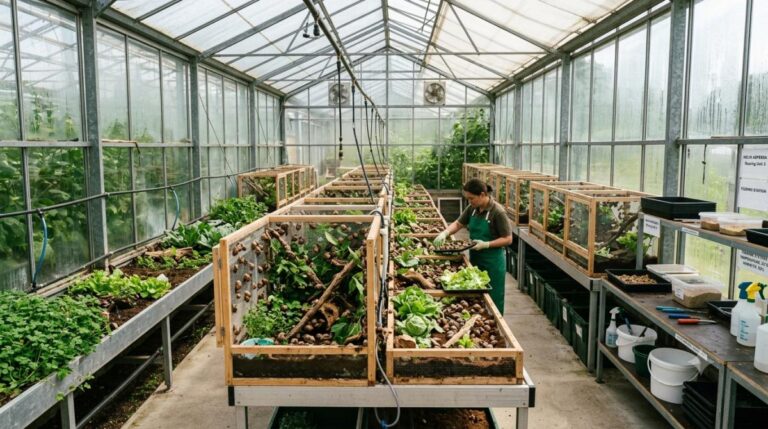
A snail farm near Centurion has been quietly turning a backyard greenhouse into a working business, and the headline numbers from operations like it are eye-catching enough to pull anyone in. But before you picture a money tree made of shells, it helps to flip the question around. Strip out the sales pitch and ask what a small snail colony actually does for a self-sufficient homestead, and you land somewhere more useful than a get-rich-quick scheme. Snails are not really a casual food crop in our climate. They are, however, a genuinely interesting node in a closed-loop garden system, a source of a high-value skincare ingredient, and only then, with serious infrastructure, a possible income stream.
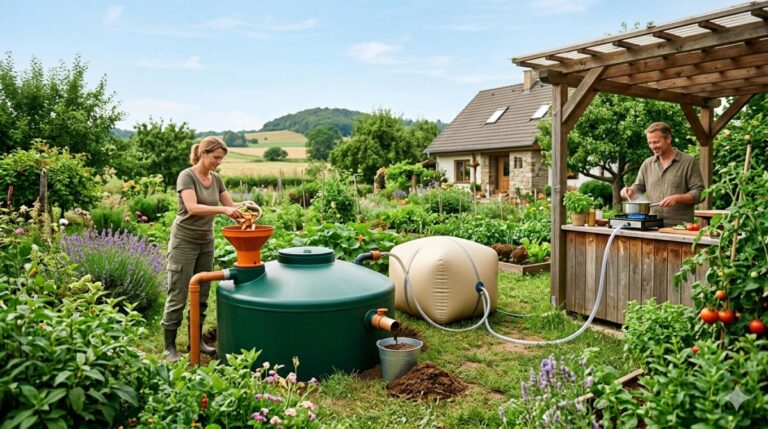
Every South African home throws away two things at once: a bin full of food scraps headed for the landfill, and money on a gas bottle or an electricity account that climbs every year. A biogas digester closes that loop. You feed it the peelings, the plate scrapings and the garden waste, it hands back gas you can cook on, and what's left over comes out as a rich liquid fertiliser for the veg patch. Nothing wasted, the cycle running on what your household already produces daily.
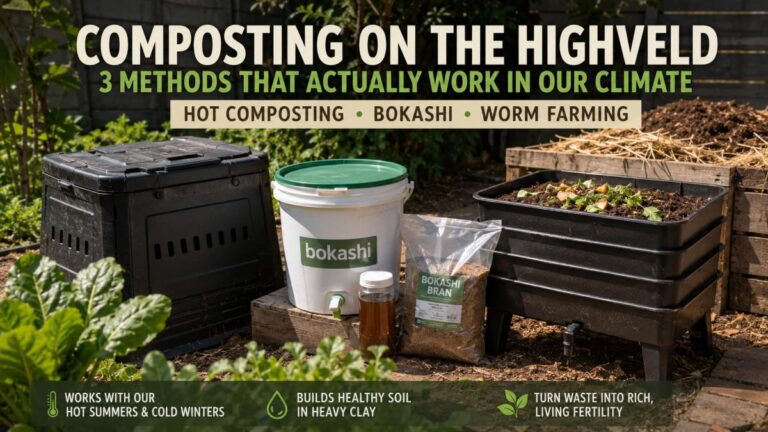
Every South African gardener who has tried to make compost knows the frustration. You build a tidy heap in spring, full of good intentions, and by midsummer it has either baked into a dry brown brick or collapsed into a sour, fly-ridden mess. The Highveld punishes half-measures. Our summers bring fierce afternoon heat and violent thunderstorms, while winter nights routinely drop below freezing across Gauteng, the Free State, and Mpumalanga. Add load-shedding, water restrictions, and our notoriously heavy clay soils, and it becomes clear that composting advice written for the mild English garden simply does not apply here.
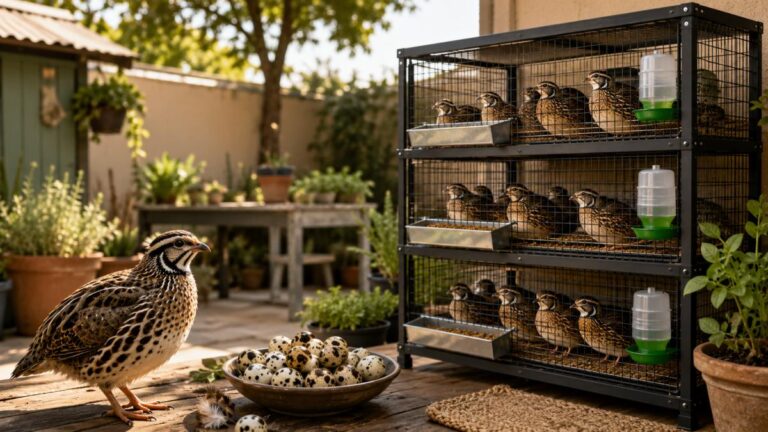
For years, the backyard chicken has been the poster bird of suburban self-sufficiency in South Africa. But for anyone living on a small erf, in a townhouse complex, or in a sectional title unit, chickens are often more trouble than they are worth. They are noisy, they need space, the roosters get you reported to the body corporate, and you wait the better part of six months before you see a single egg. There is a quieter, faster, more space-efficient alternative that most South Africans have never seriously considered: the Coturnix quail. These compact little birds are becoming the homesteader's secret weapon, and they fit into urban Gauteng, Cape Town and coastal living in a way chickens simply cannot. If you have a patch of patio, a corner of a courtyard, or even a well-ventilated garage, you can keep quail. This guide walks you through why quail beat chickens for small-space South African living, how to house and feed them when local quail feed is hard to come by, and what you need to know about the bylaws before you start.

Most South Africans know spekboom as the carbon-sucking succulent that gets planted at corporate green days and Earth Hour events. What gets forgotten in all the climate hype is that Portulacaria afra has been feeding people, livestock, and wildlife on this land for thousands of years. Long before it became a poster plant for offset schemes, the Khoi and San harvested its tangy leaves on long treks across the Eastern Cape, and Karoo farmers leaned on it through brutal droughts when nothing else would grow. For anyone serious about food resilience, that history matters. A plant that survives on minimal rainfall, propagates from a broken twig, lives for two centuries, and packs more vitamin C than most lettuce deserves more than a token shrub in the corner of the garden. It deserves a place in the survival pantry.
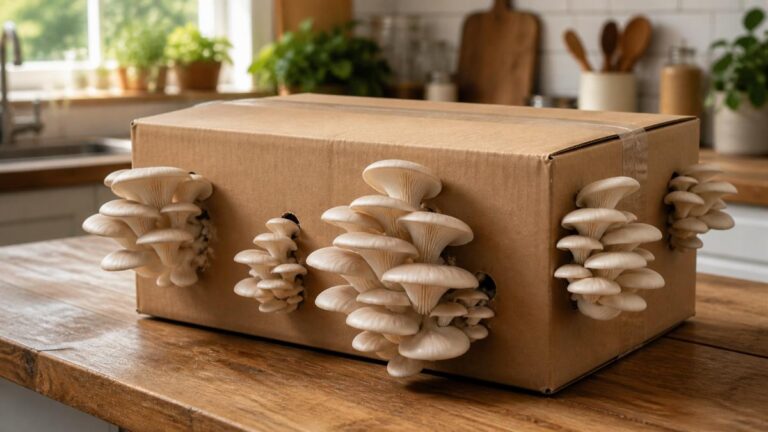
Gourmet mushrooms have quietly become one of the more expensive items in the fresh produce aisle. At most South African retailers, oyster mushrooms can set you back anywhere from R80 to R150 per 200g punnet. That adds up fast, especially when you start using them regularly in cooking. What most people do not know is that cardboard, the kind your last online order arrived in, is one of the most effective growing substrates for oyster mushroom mycelium. With a few rand worth of spawn and a recycled box, you can produce several kilograms of fresh mushrooms every month, right inside your home.

Most households in South Africa spend a surprising amount on commercial toothpaste every year. When you multiply the cost of a tube by the number of people in your home and by twelve months, it adds up. And that is before you consider what you are actually putting in your mouth. Fluoride debates aside, the average commercial toothpaste contains a list of synthetic ingredients that many people would rather avoid. The good news is that making your own toothpaste at home requires only three basic ingredients, costs almost nothing, and genuinely works. This article walks you through exactly how to do it.

There is a strange disconnect in modern South African life. We have spent the past three years watching egg prices swing wildly. We have lived through avian flu shortages where Pick n Pay shelves stood empty. We have absorbed feed inflation, fuel surcharges, and load shedding penalties baked into every dozen we buy. And yet the obvious answer, the one our grandparents would not have thought twice about, is sitting in the back garden behind a low fence: keep your own hens.

There is a complete, daily food system sitting in the bulk section of almost every grocery store. It costs less than a taxi ride, needs no electricity, no soil, and no equipment beyond a jar and water. It produces fresh, living food every single day with less than five minutes of effort. It has been used for centuries, validated by food science, and largely ignored by the modern supplement industry for one simple reason. There is nothing to sell. This is not a trend. It is a biological process you can run in your kitchen starting tomorrow morning.

Store-bought mayonnaise is one of those products that looks simple on the surface but hides a surprisingly long list of ingredients once you flip the jar around. Canola oil, modified starch, artificial preservatives, and flavourants you cannot pronounce tend to make up the bulk of commercial mayo. When you make your own at home, you control every single ingredient, you know exactly what goes in, and the result is a condiment that tastes completely different to anything you will find on a supermarket shelf.



