Physical Address
304 North Cardinal St.
Dorchester Center, MA 02124
Physical Address
304 North Cardinal St.
Dorchester Center, MA 02124

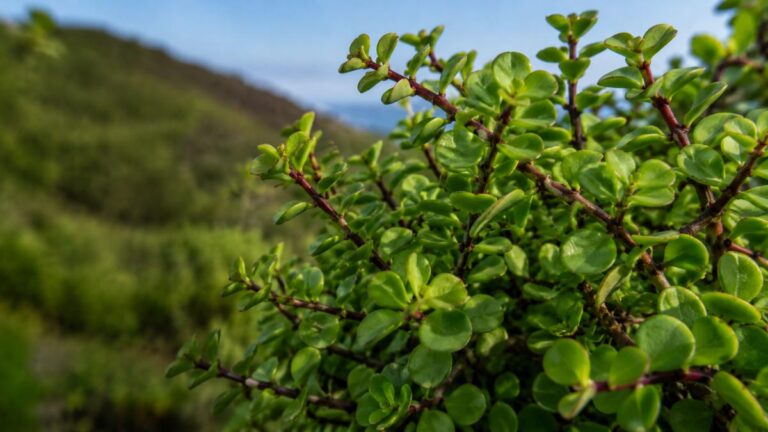
Most South Africans know spekboom as the carbon-sucking succulent that gets planted at corporate green days and Earth Hour events. What gets forgotten in all the climate hype is that Portulacaria afra has been feeding people, livestock, and wildlife on this land for thousands of years. Long before it became a poster plant for offset schemes, the Khoi and San harvested its tangy leaves on long treks across the Eastern Cape, and Karoo farmers leaned on it through brutal droughts when nothing else would grow. For anyone serious about food resilience, that history matters. A plant that survives on minimal rainfall, propagates from a broken twig, lives for two centuries, and packs more vitamin C than most lettuce deserves more than a token shrub in the corner of the garden. It deserves a place in the survival pantry.
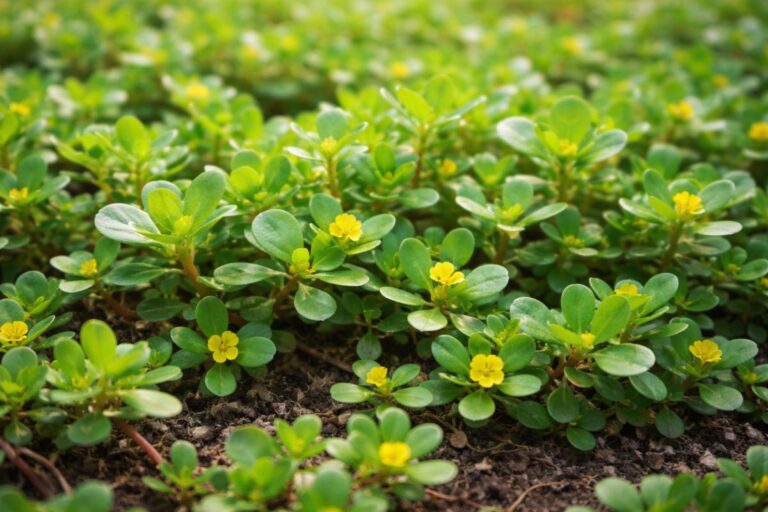
Most South African gardeners pull it out without a second thought. It appears between vegetable rows, creeps along pathways, and carpets bare soil after summer rain with its fat, succulent leaves and reddish stems. Purslane (Portulaca oleracea) has been dismissed as a garden nuisance for generations, yet it is one of the most nutritious edible plants on the planet and one that thrives in our climate with absolutely zero effort on your part. If you are serious about growing and foraging your own food, purslane deserves a place not just in your weed bin, but on your plate.

You do not need a farm or a forest to find free food in South Africa. It grows in the cracks of pavements. It lines the verges of gravel roads. It pushes through fences and spills across vacant lots. Wild edible plants are everywhere, and most people walk right past them every day. Roadside foraging is not a survival gimmick. It is an old skill that generations of South Africans practised before supermarkets existed. Grandmothers knew these plants by name. Children were taught to recognise them before they could read. That knowledge is still relevant. In fact, with food prices rising and interest in self-sufficiency growing, it is becoming relevant again.

There is a quiet kind of wisdom sitting in the food memories of older South Africans. Ask your grandmother what she ate as a child and she will describe dishes that cost nothing, grew without chemicals, survived drought, and tasted like something you cannot find in any Pick n Pay. She was not eating peasant food. She was eating some of the most nutritionally dense, climate-resilient crops on the planet. Modern supermarkets have convinced a generation of South Africans that food security means buying imported varieties of vegetables that were never suited to this soil in the first place. Meanwhile, the crops that sustained entire civilisations on this continent have been quietly forgotten or dismissed as "old people's food." That changes today. Here are ten indigenous and traditionally grown crops that belong back in your garden, your container pots, and on your table.

Your grandmother probably knew this plant. Her grandmother definitely did. Somewhere along the way, between the rise of supermarkets and the slow erosion of indigenous food knowledge, millions of South Africans stopped eating one of the most nutritious vegetables on the continent. Amaranth. Known as thepe in Sesotho, Sepedi and Setswana. Imbuya in isiZulu and isiXhosa. Misbredie in Afrikaans. Morogo or marog to people across Gauteng, Limpopo, the North West and Mpumalanga. You may have pulled it out of your garden as a weed without realising you were discarding something worth more, nutritionally speaking, than most of what you buy at Pick n Pay. This article is your reintroduction. Amaranth is not just a survival food or a poverty food or a township food. It is a genuine superfood that health stores in Europe and the United States now sell in capsule form at R400 a bottle. And you can grow enough of it to feed your family from a single five-litre bucket.

Walk through any township, suburb, roadside verge, or vacant lot in South Africa and you will find blackjack. It grows in pavement cracks. It grows in abandoned fields. It grows along railway lines, in garden borders, between rows of maize, and in every patch of disturbed soil from the Cape to Limpopo. Every South African knows it because of the tiny black seeds with barbed bristles that stick to your socks, your trousers, and your dog's fur.

Imagine a food crop that you plant once and never have to plant again. A crop that survives drought, frost, poor soil, and total neglect. A crop that produces kilograms of nutritious tubers underground while growing bright yellow sunflowers above the surface. A crop that spreads on its own, feeds your family through winter, and actually becomes harder to get rid of than to grow.