Physical Address
304 North Cardinal St.
Dorchester Center, MA 02124
Physical Address
304 North Cardinal St.
Dorchester Center, MA 02124

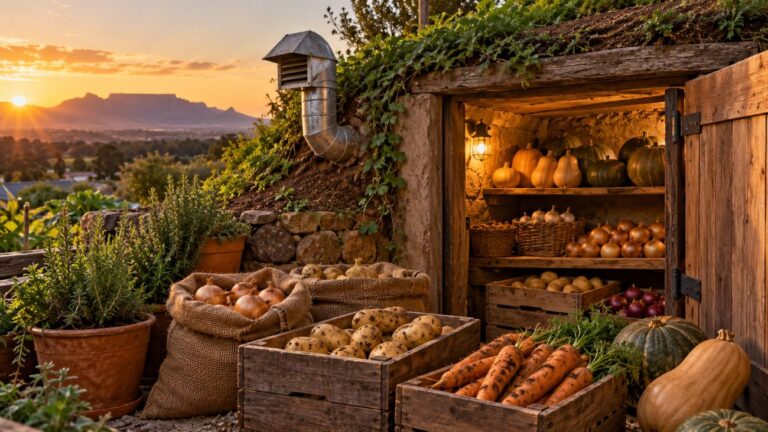
A root cellar keeps your potatoes sound through winter, and a zeer pot will hold a week of greens through an outage. Neither will save a freezer full of meat when the power goes and stays gone. Meat needs a different approach: instead of keeping it cold, you change it so that bacteria can no longer live in it. That is active preservation, and South Africans already have one of the best examples in the world hanging in the kitchen every winter.
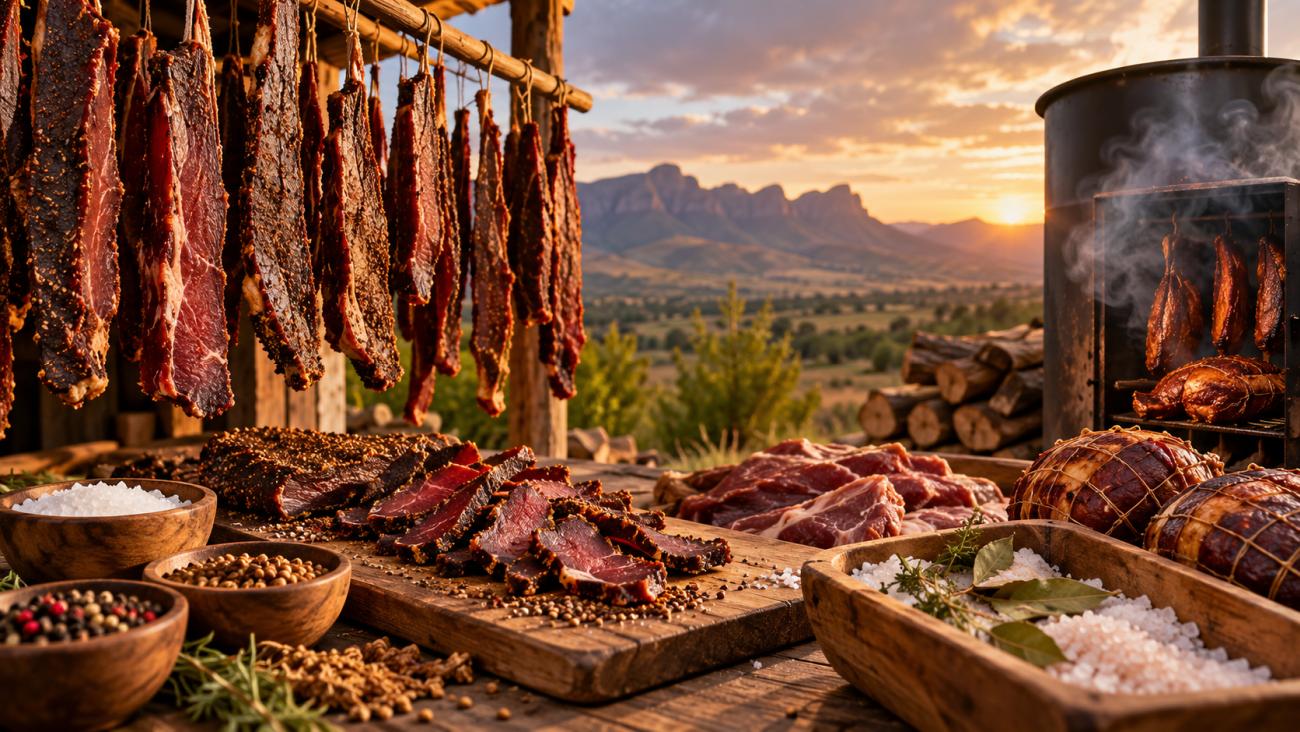
This guide covers the three methods that work without electricity: drying (biltong and jerky), salt curing, and smoking. It also covers the parts most online guides skip, namely what our climate does to each method, which local woods to burn, and where the law and the parasites draw hard lines.
Every method here attacks the same thing: water. Bacteria and moulds need free moisture to grow. Salt pulls water out of muscle and binds what remains. Drying removes it. Smoke deposits compounds on the surface that slow spoilage and adds a dry outer skin. Combine two or three of these and you get meat that sits safely on a shelf.
Food scientists measure this as water activity, a scale from 0 to 1. Fresh meat sits near the top. A study of commercial beef, kudu and springbok biltong bought around Pretoria and Johannesburg split the samples into two clear groups: dry biltong with a water activity of roughly 0.65 to 0.68 and a high salt content, and moist biltong sitting at 0.85 to 0.89. The dry group met hygiene standards; the moist group was a different, less stable product. That gap matters more than any spice recipe. If you want meat that lasts without a fridge, you want the dry end.
South Africa does not have one curing climate. It has several, and they decide which method you should use and when.
The summer-rainfall interior (Gauteng, Free State, North West, Limpopo, Mpumalanga highveld, the Karoo and Northern Cape) has the ideal biltong climate from late autumn to early spring: cool nights, low humidity, steady breeze and few flies. It is the same dry winter air that makes solar-drying fruit and vegetables so effective inland, and it is why biltong-making traditionally clusters around May to August, which also happens to be the main hunting season.
The Western Cape flips this. Winter brings the rain and damp, while summer is dry but hot and fly-heavy. Air-drying works in dry spells and in a well-ventilated, shaded space, but you need to watch the forecast rather than the calendar.
The KwaZulu-Natal and Eastern Cape coast, and the Lowveld stay humid or hot for most of the year. Air-drying here is slow and mould is a constant threat. In these regions, lean on heat: hot smoking and heated jerky are more reliable than raw air-dried biltong.
A useful benchmark: research on biltong describes it as traditionally wind-dried in the shade during winter, or dried in a ventilated box at room temperatures no higher than about 22°C. If your conditions are well outside that, change the method rather than hoping.
Biltong works because it stacks three barriers. A 2025 University of the Free State study in the South African Journal of Science describes it as preserved by salt, vinegar and drying, and stable at room temperature once finished. That same research team built their recipes around a 60% weight loss, the figure recommended by the CSIR, and their finished product landed in the dry, stable range.
That weight-loss target is the single most useful tool you have without a lab. Here is the method in practice:
No electricity is needed, but a small 12V fan running off a solar battery speeds drying considerably in still or humid weather. If your home already has a backup system, this is one of the cheapest loads you can put on it.
Jerky is biltong’s cousin: thinner slices, a wetter marinade, and usually some heat. That heat is the key difference, and it’s the reason jerky is the better choice in humid regions and in summer.
US extension services have tested home jerky methods extensively. The University of Wyoming Extension sets out three tested options for making it safely: a vinegar soak, pre-cooking the meat to 71°C internal, or heating the dried strips afterwards. Notably, they flag that the vinegar-soak method has not been tested against parasites in game, so they do not recommend it on its own for wild meat.
Both heating options are possible without grid power:
Slice no thicker than about 6 mm. Jerky is done when a cooled piece cracks when bent but does not snap clean through. Raw poultry is generally not recommended for jerky, so keep your backyard chickens for the pot.
Before refrigeration, South African households kept meat through summer with heavy salting. Soutribbetjie, salted and air-dried lamb rib, is still made in the Western Cape and Karoo, and pekelvleis (brined meat) was standard farm fare.
There are two routes:
Dry salting packs the meat in coarse salt, often with a little sugar and spice, and lets it pull moisture out over days to weeks. The meat is then rinsed, dried and hung. Thicker cuts take longer: a common rule from US curing guides is around a week of curing per 2.5 cm of thickness.
Curing salt adds sodium nitrite, which guards against botulism, the main danger in thick, slow-cured or cold-smoked meat. Butchery supply shops sell ready-mixed cure. Follow the manufacturer’s rate to the gram, as Mississippi State University’s home curing guide warns that too much nitrite is itself toxic.
A caution for warm regions: that same guide notes its own university does not recommend aging dry-cured meats at home because of its hot, humid climate. If you’re on the coast or in the Lowveld, cure for a shorter time, then hot smoke or cook.
Smoking comes in two forms, and they are not interchangeable.
Hot smoking cooks the meat while it smokes, at chamber temperatures well above 70°C. A kettle braai with coals on one side and meat on the other does the job, as does a converted drum (only ever one that held food-grade contents, burnt out first). Hot-smoked meat is safe to eat straight away and keeps a few extra days, or much longer if you go on to dry it into jerky.
Cold smoking adds flavour and a protective skin without cooking. The chamber needs to stay cool, ideally around 21°C to 27°C, as bacteria multiply rapidly above that. That makes cold smoking a winter job in most of the country, and only for meat that has already been salt-cured. The usual off-grid build is a firebox dug lower than the smoking chamber, connected by a trench or pipe a few metres long so the smoke cools on the way.
For wood, use dense, dry hardwood and avoid resinous softwoods like pine. Local options worth knowing:
Never burn treated, painted or laminated timber, old pallets, or oleander, which is poisonous in every part including its smoke.
Game is the natural fit for all of this, and kudu, springbok, blesbok and impala biltong are a national tradition. But game has to come through the front door.
Every province requires a hunting licence or permit of some kind (exempted game farms have their own arrangements) plus written permission from the landowner, and the details differ between provinces. SA Hunters keeps a province-by-province summary of what applies where. Snared or poached “bushmeat” is illegal, is often handled with no hygiene at all, and drives local wildlife declines. Under the Meat Safety Act, meat from animals slaughtered or hunted for your own use may not be sold, so preserve what your household will eat.
The wild pig problem is a separate issue. Warthog and bushpig, like domestic pork and meat-eating animals, can carry Trichinella parasites. Raw-dried biltong does not reach a temperature that kills them, and the long, deep freeze that US guidance prescribes is impractical when the power regularly drops out. The simple rule: cook wild pig thoroughly and never make raw biltong from it. SA Hunters also notes that warthog and bushpig meat needs a separate transport permit per carcass.
One more rule from the hunting field: if an animal was gut-shot or the meat touched intestinal contents during slaughter, use those cuts for stews and potjies where they will be cooked through, not for anything dried raw.
Dry biltong keeps best in a paper bag or hung in a cool, airy cupboard. Plastic traps moisture and invites mould. Moist biltong goes in the fridge or freezer.
Jerky goes into clean glass jars or sealed bags once fully cooled. Room-temperature guidance from US extension services ranges from about two weeks to two months, so think in weeks, not seasons. Check stored meat regularly and throw out anything with fuzzy mould or an off smell. A light white bloom of salt on biltong is normal; green, black or furry growth is not.
Hard salt-cured cuts keep longest, but soak them overnight in a couple of changes of water and cook them before eating.
It’s spring as this goes up, which means the interior’s biltong season is behind us and the warm months are ahead. That makes now the right time to practise the heat-based methods: build or adapt a kettle-braai smoker, try a batch of pre-heated jerky, and learn how your wood burns. Use that to stock up when summer specials on beef come round.
Then plan your first big biltong batch for May, when the air dries, the flies go quiet and the hunting season opens. Get the scale, the hooks and the fly cage ready now, so that when the weather turns, you’re ready to put a season’s protein on the shelf with no plug in sight.
Disclaimer: This article is general information for home food preservation and is not professional food safety, medical or legal advice. Home-cured, dried and smoked meats carry a real risk of foodborne illness if hygiene, salt levels, temperatures or drying are not right, so follow tested methods closely and discard anything that looks, smells or feels off. When in doubt, throw it out. People who are pregnant, elderly, very young or have weakened immune systems should be especially cautious with raw-dried and cold-smoked products. Hunting, meat transport and meat sale rules differ by province and change over time; confirm current requirements with your provincial conservation authority before you hunt or move game meat. selfsustain.co.za accepts no liability for illness, loss or legal consequences arising from the use of this information.