Physical Address
304 North Cardinal St.
Dorchester Center, MA 02124
Physical Address
304 North Cardinal St.
Dorchester Center, MA 02124

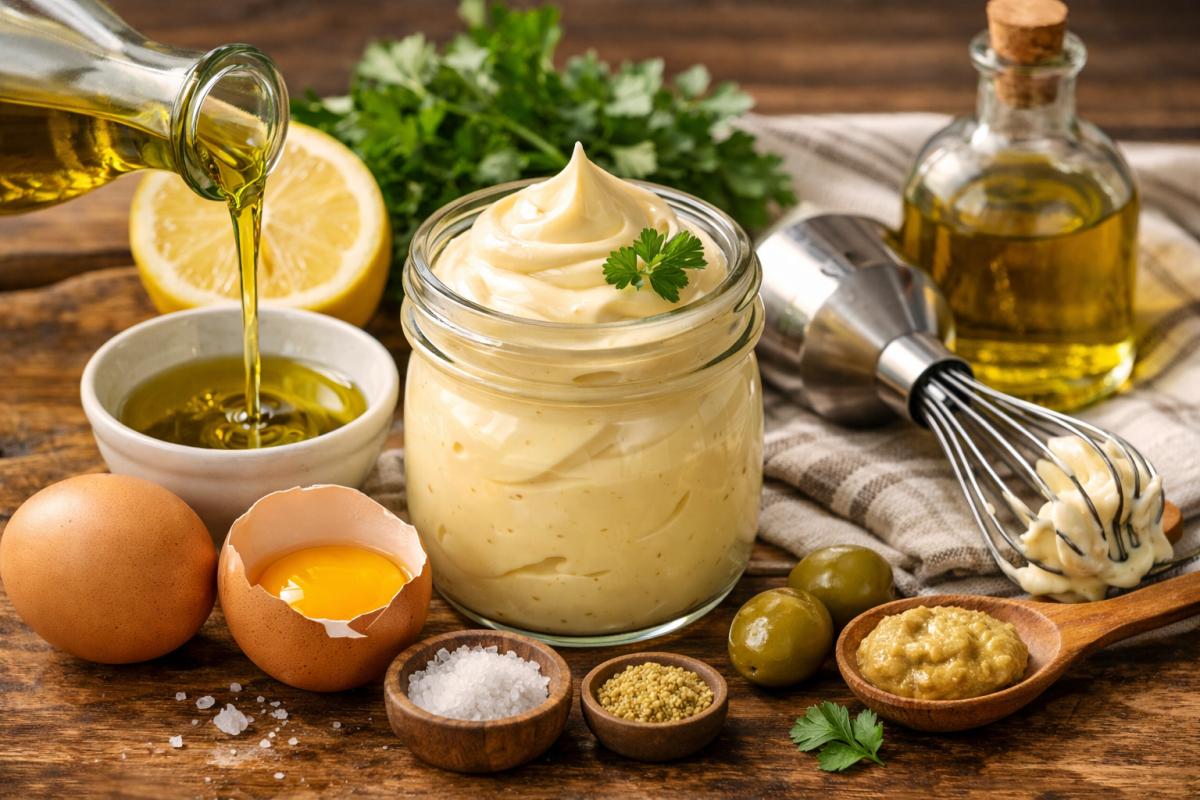
Store-bought mayonnaise is one of those products that looks simple on the surface but hides a surprisingly long list of ingredients once you flip the jar around. Canola oil, modified starch, artificial preservatives, and flavourants you cannot pronounce tend to make up the bulk of commercial mayo. When you make your own at home, you control every single ingredient, you know exactly what goes in, and the result is a condiment that tastes completely different to anything you will find on a supermarket shelf.
Making olive oil mayonnaise is also one of the most satisfying small victories in a self-sufficient kitchen. It takes under ten minutes, uses ingredients most households already have, and once you have nailed the technique you will genuinely wonder why you ever bought the bottled version.
Conventional mayonnaise in South Africa is almost universally made with refined seed or vegetable oils. Canola and sunflower oil dominate the commercial market because they are cheap and neutral in flavour. The problem is that these oils are high in omega-6 polyunsaturated fatty acids and go through significant industrial processing before they reach your bottle.
Extra virgin olive oil, by contrast, is cold-pressed and rich in monounsaturated fats, particularly oleic acid. It also contains polyphenols and antioxidants that are largely absent from refined oils. Research published in the European Journal of Clinical Nutrition has shown that regular consumption of extra virgin olive oil as part of a whole-food diet is associated with reduced inflammatory markers and cardiovascular benefit.
Beyond the health angle, olive oil mayonnaise has a depth of flavour that simply cannot be replicated with seed oils. Depending on the olive oil you choose, the mayo can have a mild fruitiness, a peppery finish, or a rich buttery quality. For a gentler result, you can blend extra virgin olive oil with a lighter oil like avocado or rice bran at a ratio of roughly half and half.
Mayonnaise is an emulsion, which means it is a stable mixture of two liquids that would not normally combine. Oil and water repel each other. What makes mayonnaise work is the lecithin found in egg yolks. Lecithin is a natural emulsifier, meaning it has one end that is attracted to water and one end that is attracted to fat. When you add oil slowly to an egg yolk mixture while agitating it, the lecithin molecules arrange themselves around tiny droplets of oil and hold them suspended in the liquid base. The result is a thick, creamy, stable sauce.
Understanding this helps you troubleshoot if things go wrong. If you add the oil too fast, the emulsion breaks before it can stabilise and you end up with a greasy, separated mess rather than mayonnaise. The fix is to add the oil as slowly as physically possible in the beginning, often just a few drops at a time, and then increase the stream gradually once the emulsion has taken hold.
The Kitchn has an excellent breakdown of emulsion science that is worth reading if you want to go deeper on the chemistry.
The ingredient list is genuinely minimal. For a batch that fills a standard 250ml jar you will need two egg yolks at room temperature, one tablespoon of Dijon mustard, one tablespoon of lemon juice or white wine vinegar, roughly 240ml of olive oil (or a blend), a pinch of salt, and a small pinch of white pepper if you have it.
Room temperature eggs are important. Cold eggs straight from the fridge make emulsification harder because the lecithin in cold yolks is less mobile and effective. Take your eggs out at least thirty minutes before you start.
The mustard does double duty here. It adds flavour but it is also an emulsifier in its own right, which makes it easier to achieve a stable result. Do not skip it.
There are three reliable ways to make mayonnaise at home, each with its own trade-offs.
The hand whisk method is the most traditional approach and gives you the most control. Place your egg yolks, mustard, lemon juice, salt, and pepper in a medium bowl and whisk them together until they are fully combined and slightly pale. Then, with the whisk in one hand, begin adding the olive oil in the tiniest possible stream with your other hand, whisking constantly. The first 50ml or so is the critical phase. Once the mixture visibly thickens and becomes glossy, you can increase the flow of oil to a thin, steady stream. Continue whisking until all the oil is incorporated. Taste, adjust seasoning, and you are done.
The immersion blender method is faster and nearly foolproof. Place the egg yolks, mustard, lemon juice, and seasoning at the bottom of a tall narrow jug. Add all the olive oil on top. Place the immersion blender at the very bottom of the jug, turn it on, and hold it completely still for the first few seconds. You will see the mayo form from the bottom up. Then slowly lift the blender as the emulsion builds. Serious Eats has a detailed guide on the immersion blender technique that demonstrates exactly how this works.
The food processor method is best for large batches. Run the processor with the egg yolks, mustard, and lemon juice for about thirty seconds first, then slowly drizzle the oil in through the feed tube while the motor is running.
Once you have the base recipe down, the variations are almost unlimited. Garlic mayonnaise, or aioli in the traditional sense, is simply made by crushing two or three cloves of raw garlic into your egg yolk base before you start adding the oil. The result is deeply savoury and works brilliantly as a dipping sauce for roasted vegetables or as a spread on home-baked bread.
Smoked paprika mayo pairs wonderfully with grilled meat. A teaspoon of smoked paprika and a small squeeze of lime juice added at the end transforms the basic recipe into something you will want to put on everything. Roasted jalape??o mayo, herb and lemon mayo, and wasabi mayo are all equally simple variations that follow the same logic. Make the base, then add your flavour at the end.
For a South African twist, a small spoonful of Mrs Ball’s chutney blended into finished mayo creates a tangy, sweet condiment that works beautifully on boerewors rolls and braai sandwiches.
Homemade mayonnaise contains raw egg yolk, which means it needs to be kept cold and used within four to five days. Always store it in a clean, sealed jar in the refrigerator. Glass jars with tight-fitting lids are ideal. The same spirit of using what you have and making things from scratch that drives a self-sufficient kitchen also applies to storage. If you are already in the habit of preserving foods in jars, you will have exactly what you need.
Some people use pasteurised eggs for homemade mayo as an added precaution, which extends the safety window slightly. The Food Safety and Inspection Service guidelines recommend keeping homemade egg-based sauces below 4 degrees Celsius at all times, which a standard refrigerator achieves without effort.
Never leave homemade mayo sitting out at room temperature for extended periods, particularly in a South African summer kitchen where ambient temperatures can climb quickly.
Making your own olive oil mayonnaise is part of a broader shift toward understanding what goes into your food and reducing your dependence on processed products. The skills involved, learning to emulsify, tasting and adjusting seasoning, understanding how fats behave, all transfer to dozens of other kitchen projects. It is the same philosophy that drives home bread-baking, fermenting your own vegetables, or making your own natural soap at home using lye and plant-based fats.
Once you are comfortable with the base recipe, try sourcing your olive oil locally. South Africa has a growing number of small-scale olive producers, particularly in the Western Cape, and buying direct from a local producer means you know exactly how the oil was made and how fresh it is. Fresh, high-quality extra virgin olive oil makes a visible difference to the final flavour of your mayo.
A jar of homemade olive oil mayonnaise sitting in your fridge is a small but meaningful statement about how you choose to feed your household. It costs roughly the same as the commercial version when you factor in the ingredients, takes almost no time to make, and tastes considerably better. That is the kind of practical self-sufficiency that is genuinely worth building into your weekly routine.