Physical Address
304 North Cardinal St.
Dorchester Center, MA 02124
Physical Address
304 North Cardinal St.
Dorchester Center, MA 02124


If you only sow seriously once a year, make it now. Spring gives South African gardeners long days, warming soil and a full growing season ahead, which is the combination that turns seed packets into real food. What you plant between September and November decides whether you’re picking a few tomatoes in January or filling your cupboards with butternuts that carry you into winter.
The trick is to plant with a plan. A bed that’s simply “a bit of everything” tends to produce a bit of nothing. A bed planned around three questions does far better: which crops give the most food for the space, where each one should go, and when to sow them so the harvest keeps coming. This guide works through all three using seed you’ll find on the racks at most garden centres, co-ops and hardware stores.
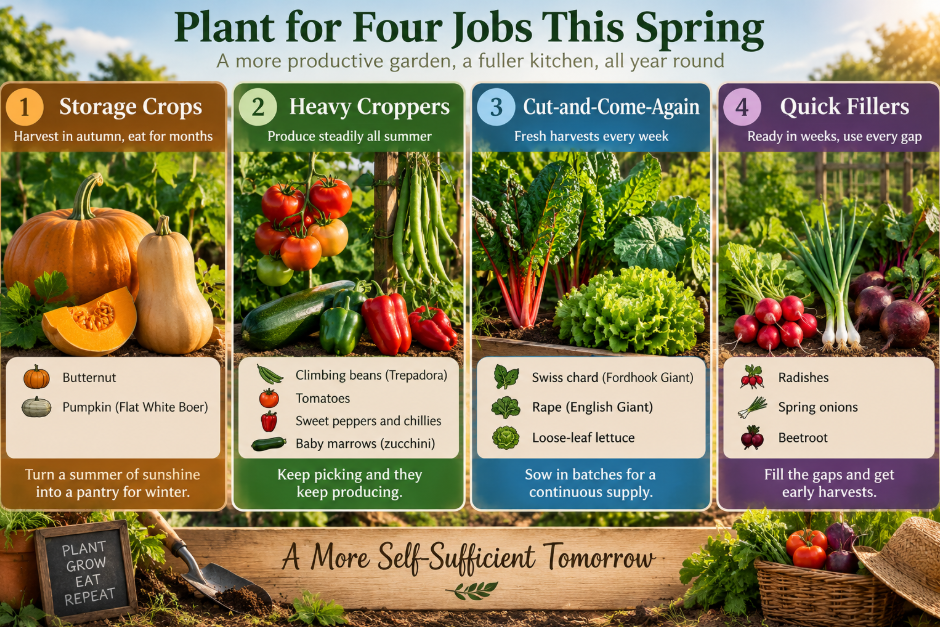
A productive spring garden fills four roles at once. Think of your seed shopping in these categories and you’ll cover your kitchen from December through to the cold months.
Add a few flowers to the mix and you’ve also got pollinators and pest control handled.
If your goal is food that lasts, start here. Pumpkins and butternuts turn a summer of sunshine into a pantry that lasts well into winter, and they need little attention once established.
Starke Ayres’ Waltham butternut is the classic open-pollinated choice. The company notes that the vines can be run up a trellis to save ground, which makes butternut workable even in a small garden. Three or four plants are enough for a family, and properly cured fruit keeps for months in a cool, dry cupboard.
Flat White Boer pumpkin gives even more weight per plant, but it sprawls three to four metres in every direction. Plant it only if you can give up a stretch of lawn or let it climb over a compost heap. Pumpkins seeded straight into an old compost pile often outperform those in the bed.
Both need full sun, meaning six hours or more, and plenty of compost. Sow three seeds per spot, 2 cm deep, and thin to the strongest seedling.
These are the plants that keep producing as long as you keep picking.
Climbing beans are probably the best return on space in the whole garden. Trepadora is a vigorous, high-yielding variety that must be trellised. A single row against a fence or lattice panel gives you beans for weeks, and frequent picking keeps the plants flowering.
Tomatoes earn their place if you have a sunny, sheltered spot. Indeterminate types keep fruiting until autumn if you stake them and pinch out side shoots. Bought seedlings give you a head start if you’re sowing late.
Sweet peppers and chillies are compact, productive and forgiving. A few chilli plants will supply a household for a year once you dry or freeze the surplus.
Baby marrows (zucchini) are almost too productive. Two plants will keep a family busy, and the fruit is best picked small and often.
Greens are where a garden pays you back fastest, and they’re the answer for any part of the bed that doesn’t get much sun.
Swiss chard is the most dependable leafy crop in the country. Starke Ayres markets its Fordhook Giant as a vigorous, high-yield variety. If you harvest the outer leaves and leave the centre, one sowing can keep producing for most of a year. It tolerates heat, light frost and a fair amount of shade.
Rape (English Giant) and mustard spinach grow faster than chard and are excellent cooked. They tend to bolt in midsummer heat, so sow now for spring harvests and again in autumn.
Loose-leaf lettuce is best sown in small batches every three weeks so you never have a glut followed by nothing.
Radishes are ready in about a month and can be tucked between slower crops. Spring onions line the front edge of a bed neatly. Beetroot gives you two harvests, young leaves for cooking and roots a couple of months later. These crops fill space that would otherwise sit empty while your pumpkins and beans size up.

Walk your garden on a sunny day and note how many hours of direct sun each area gets. Then place crops accordingly.
Garden and Home’s guide to shade-tolerant edibles and GrowVeg’s South African shade guide are both useful if much of your garden sits in partial shade.
One point many gardeners miss: shade in South Africa changes a lot through the year. The sun tracks across the northern sky, so walls and buildings shade the ground on their south side. In winter those shadows stretch several metres. In midsummer, though, the noon sun is nearly overhead across the northern provinces and around 80 degrees above the horizon even in Cape Town. Summer sunrise and sunset also swing to the south-east and south-west. A bed that looks hopelessly shady in September can get good sun by December, so don’t write off a spot based on how it looks today.
Spring sowing dates vary across the country, so adjust for where you live.
In frost-prone inland areas, including Gauteng, the Free State, the higher parts of Mpumalanga and Limpopo, much of North West and the Karoo, sow warm-season crops once frost risk has passed. That’s generally mid-September onward, though colder high-lying spots may need to wait until October. Keep sowing through November. Gardenate’s summer rainfall calendar gives a month-by-month breakdown for this zone.
On the KwaZulu-Natal coast and in the Lowveld, frost is rarely an issue and you can start earlier. The bigger threat there is midsummer humidity and the fungal disease it brings, so get plants established early.
In the Western Cape and other winter rainfall areas, spring is the main window for summer crops, but the dry season is ahead. Plan irrigation and mulch from day one. The Builders month-by-month vegetable calendar flags these regional differences each month.
Go vertical. Beans, butternut, cucumbers and even small pumpkins can climb. Every plant on a trellis frees up ground below.
Sow in succession. Instead of planting all your lettuce, radishes and beans at once, sow a few every two to three weeks. You’ll harvest steadily instead of in one overwhelming wave.
Interplant. Radishes and spring onions can grow between young pumpkin plants and be harvested before the vines need the space.
Plant flowers with a purpose. Marigolds, nasturtiums and alyssum draw pollinators and beneficial insects such as hoverflies. Pumpkins and baby marrows need pollinators to set fruit, so a few flowers directly increase your harvest.
Fill the shade with greens. Don’t leave shady patches empty. That’s where your chard and lettuce go, freeing your sunniest spots for fruiting crops.
Spring success starts below ground. Dig generous compost into every bed before sowing, especially beds against walls where soil is often compacted, dry and full of builder’s rubble. Hungry crops such as pumpkins, tomatoes and baby marrows benefit from a second feed of compost or manure once they start flowering.
Water deeply and less often rather than a light sprinkle every day, which encourages shallow roots. Drip irrigation saves both water and effort, and a thick mulch of straw, grass clippings or leaves keeps soil cool and moist through the heat. The Plantinfo list of shade vegetables also notes that shaded beds can hold moisture longer, so adjust your watering bed by bed.
To see how this comes together, picture a bed five metres long and a metre deep against a wall.
At the sunniest end, plant three butternut plants trained up a trellis, with the vines free to run onto the lawn edge. Along a fence or lattice, sow a row of climbing beans. In the middle, set two chilli plants and a pepper. Against the wall where the shade lingers longest, sow a row of chard with lettuce between. Along the front edge, alternate spring onions and radishes, resowing radishes every three weeks. Tuck a few nasturtiums and marigolds into the corners.
That one bed gives you weekly greens, steady beans and peppers all summer, and a store of butternut for winter.
Spring is the season that sets up your whole year. Plant storage crops for winter, heavy croppers for summer, greens for every week and quick fillers for every gap. Match each crop to its light, time it for your region and feed the soil well. Do that now, and by autumn your garden will be doing a lot more than looking good.