Physical Address
304 North Cardinal St.
Dorchester Center, MA 02124
Physical Address
304 North Cardinal St.
Dorchester Center, MA 02124

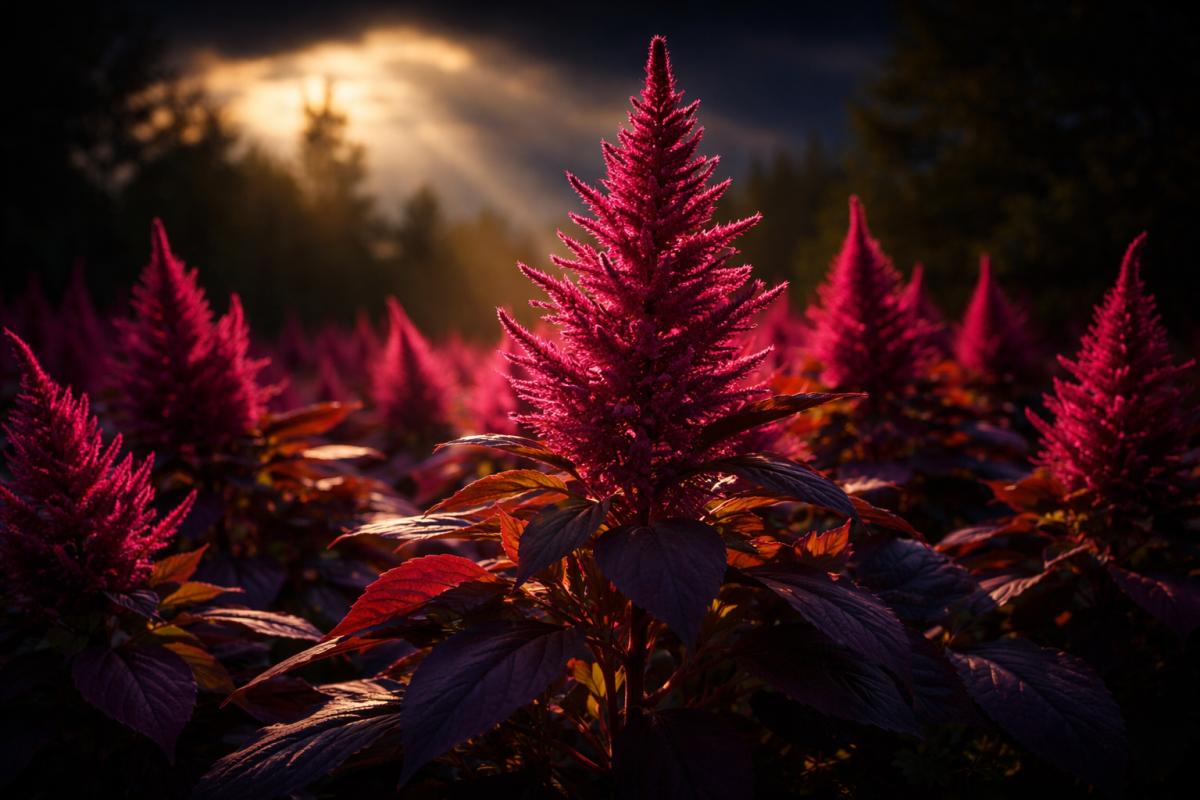
Your grandmother probably knew this plant. Her grandmother definitely did. Somewhere along the way, between the rise of supermarkets and the slow erosion of indigenous food knowledge, millions of South Africans stopped eating one of the most nutritious vegetables on the continent.
Amaranth. Known as thepe in Sesotho, Sepedi and Setswana. Imbuya in isiZulu and isiXhosa. Misbredie in Afrikaans. One of the leafy greens your grandmother may have prepared as morogo, the traditional South African category of cooked wild greens that sustained rural communities for generations. You may have pulled it out of your garden as a weed without realising you were discarding something worth more, nutritionally speaking, than most of what you buy at Pick n Pay.
This article is your reintroduction. Amaranth is not just a survival food or a poverty food or a township food. It is a genuine superfood that health stores in Europe and the United States now sell in capsule form at R400 a bottle. And you can grow enough of it to feed your family from a single five-litre bucket.
Amaranth belongs to the genus Amaranthus, a group of roughly 70 species that have been providing food to human beings for thousands of years. The National Academies of Sciences documented that vegetable amaranths are arguably the most widely eaten boiled greens across the humid lowlands of Africa and Asia, and that in parts of southern Africa they are described as among the most well-known and widely used of all wild edible plants.
They are a dual-purpose plant. The leaves function exactly like spinach and can be cooked in the same way. The seeds are tiny, pale, gluten-free grains that can be cooked as porridge, ground into flour, or popped like miniature popcorn. One plant gives you two food sources.
Several species grow wild across South Africa and most of sub-Saharan Africa. Amaranthus hybridus and Amaranthus cruentus are the varieties most commonly eaten here. You have almost certainly walked past them. They grow on roadsides, in vacant lots, in the cracks of pavements and along the edges of fields. They are not weeds. They are food hiding in plain sight.
The reason health stores charge so much for amaranth products is the same reason your ancestors valued the plant. The numbers are extraordinary.
According to nutritional analysis published on NutritionAndYou, fresh amaranth leaves contain 29 percent of your daily recommended iron intake per 100 grams, making them one of the richest plant sources of iron available. They deliver 43 mg of vitamin C per 100g, over 70 percent of your daily requirement. Vitamin A sits at more than 97 percent of daily recommended levels per 100g, supplied as beta-carotene. Calcium comes in at 215 mg per 100g. Potassium at 611 mg. The leaves also contain zinc, copper, manganese, folate and vitamin K in meaningful quantities.
For context, that iron figure matters enormously in South Africa, where iron-deficiency anaemia is a documented public health problem, particularly among women and children. A vegetable that grows itself, costs nothing to source as seed, and delivers close to a third of your daily iron needs per serving deserves to be on every South African table.
Research published in the scientific journal Nature (Scientific Reports) confirmed that amaranth leaves are rich in potassium, calcium, magnesium, iron, manganese, copper and zinc, alongside antioxidant compounds including vitamin C, beta-carotene, flavonoids and phenolic acids. The science supports what African grandmothers have known for generations.
The seeds, when used as a grain, offer another layer. As documented by IntechOpen’s review of amaranth nutrition, amaranth grain surpasses traditional cereals in protein, dietary fibre, calcium, iron and magnesium. It contains the essential amino acids lysine and methionine, which are typically limited in cereal grains like maize and wheat. This makes amaranth grain a complementary protein source to the staple pap and bread diet of many South African households.
The same story that played out with blackjack and sunchoke played out with amaranth. During colonisation, indigenous vegetables were framed as food for people who could not afford better. Supermarkets arrived and redefined “proper vegetables” as the imported varieties on their shelves: butternut, baby spinach, broccoli, English cucumbers. The local knowledge began to disappear.
Amaranth remained on the fringes, surviving in rural kitchens, in township markets, in the gardens of people who had never forgotten what it was. But for millions of South Africans, particularly younger generations raised on commercial produce, it became invisible.
Food for Mzansi documented that entrepreneurs are now working to bring amaranth back to broader markets, pointing out that the plant grows in poor soil with very little water while being rich in minerals, iron, zinc, calcium, protein and carbohydrates. That combination, resilience combined with nutrition density, is exactly what South Africa needs.
It is also exactly what a tight household budget needs.
Here is the good news. Amaranth is one of the easiest food plants in the world to grow. It is drought-tolerant, pest-resistant, fast-growing and completely comfortable in a container. You do not need a garden. You do not need good soil. You do not need much money.
What you need to get started:
A container of any kind with drainage holes drilled in the bottom. A five-litre bucket from Builder’s Warehouse works perfectly. A 20-litre paint bucket is even better. Broken clay pots, recycled food containers, old cooldrink bottles cut in half, wooden crates lined with a plastic bag with holes punched through: all of these work. Amaranth is not fussy about its home.
Fill your container with any available soil, ideally mixed with compost if you have access to it. Spent potting mix from a previous plant works fine. Garden soil from the ground is acceptable. A bag of potting soil from Checkers or Spar costs around R30 to R50 and will fill multiple containers.
Sourcing seed:
This is where amaranth becomes genuinely accessible to the lowest income household. Seed can be purchased online from suppliers like Seeds and Plants South Africa at very low cost. A packet sufficient for a whole season typically costs under R30.
Alternatively, and this is the more self-sufficient route: find an amaranth plant growing wild. They are everywhere. Pull one gently, let it dry in the sun, and shake the seed head over a piece of newspaper. You will collect thousands of seeds. Amaranth is one of the most seed-prolific plants on earth. A single mature plant can produce up to 100,000 seeds.
If you can get your hands on seeds from a neighbour, a community garden, a local market or a wild plant, you never have to buy seeds again. Share what you harvest.
Planting:
Scatter seeds lightly across the surface of your container. Do not plant deep. A light covering of soil, roughly 5mm, is enough. Water gently. Keep the container in a sunny spot, amaranth loves direct sun and thrives in the heat. Gauteng and Limpopo summers are ideal growing conditions. Even the Northern Cape heat suits it.
Germination happens within 10 to 21 days when soil temperatures are between 18 and 25 degrees Celsius. Once seedlings are a few centimetres tall, thin them so that the strongest plant has room to grow. In a bucket, one to two plants is ideal.
Harvesting:
This is where amaranth shows its real value. You do not harvest the whole plant at once. You harvest leaves continuously from the outside, allowing the plant to keep producing from the centre. A single amaranth plant in a bucket can provide fresh leaves for months. Cut leaves when young and tender for salads or lightly sauteed dishes. Mature leaves are excellent wilted in oil with garlic and chilli, cooked with pap, added to soups and stews, or blended into smoothies.
When the plant eventually bolts and flowers, let the seed head develop. Harvest seeds for next season’s planting, or dry and use them as grain. Nothing is wasted.
Water needs:
Amaranth is significantly more drought-tolerant than most vegetables. A bucket plant needs watering every two to three days in summer. In cooler months, less frequently. If you have collected rainwater or greywater, amaranth is a suitable crop to irrigate with it. For ideas on setting up water collection at home, see our guide to water security for South African households.
Thepe cooked with pap is a traditional meal across much of South Africa that predates the supermarket era. The preparation is straightforward. Wash young leaves thoroughly. Wilt them in a pan with a little oil, garlic and salt. Serve alongside soft pap or samp. Add tomato and onion if available. The flavour is mild, slightly earthy and very pleasant, similar to spinach but with more body.
In KwaZulu-Natal, thepe (amaranth) is often cooked and mixed with peanut butter, a combination that significantly boosts the protein content of the meal. In Limpopo and Mpumalanga, dried amaranth leaves are stored for use out of season, soaked and rehydrated in soups.
For the seeds: rinse and boil like oats, cooking for approximately 20 minutes until soft. Add salt, a little sugar or honey, and eat as a nutritious breakfast porridge. Alternatively, dry-toast seeds in a pan until they pop, then mix with honey and seeds to make a simple energy bar.
For a household with no budget for gardening at all, the entry point is still accessible. Walk your neighbourhood. Amaranth grows wild across South Africa, particularly in disturbed soil. Harvest young leaves from plants growing away from roads, industrial areas and contaminated ground. Wash them thoroughly. Cook them. Eat them.
If you find a plant seeding, collect the seeds. Dry them. Plant them in any container you can find with any soil available. Water with whatever water is accessible. You have started a food garden for free.
The knowledge is the resource. That is what this site exists to share.
There is something worth sitting with here. One of the most nutritious vegetables in Africa, a plant your ancestors depended on for iron, protein and vitamins across generations, is currently growing as a weed in the verge outside your house. At the same time, people in Europe are paying premium prices for dried amaranth leaf supplements.
That gap between what we have forgotten and what we once knew is exactly where South African self-sufficiency has to begin. Not with expensive equipment or complex systems, but with reclaiming the knowledge that was always ours.
Your grandmother knew it as thepe or imbuya. She may have served it as morogo alongside pap. That knowledge belongs to you too. Bring it back.
External sources: National Academies Lost Crops of Africa | NutritionAndYou amaranth greens | PMC Scientific Reports amaranth minerals | IntechOpen amaranth nutrition review | Food for Mzansi amaranth market