Physical Address
304 North Cardinal St.
Dorchester Center, MA 02124
Physical Address
304 North Cardinal St.
Dorchester Center, MA 02124

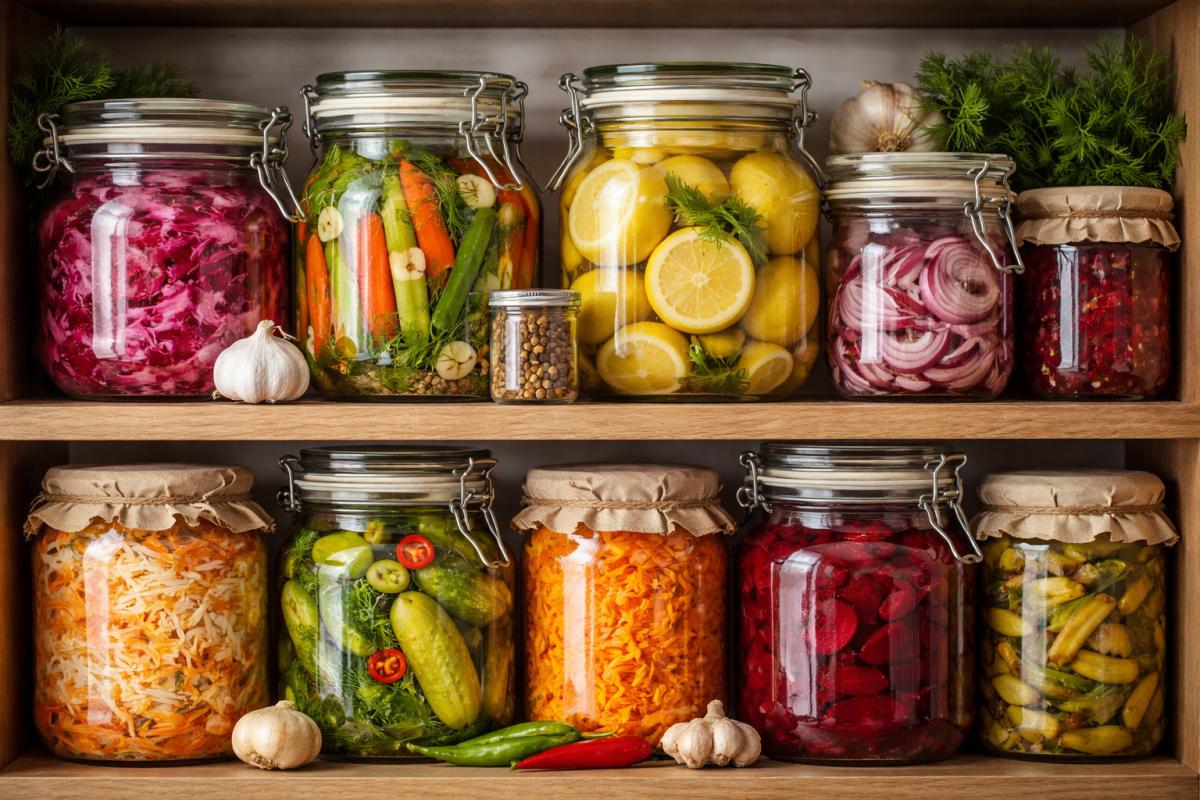
If you grow beetroot and carrots in your South African garden, you already know the problem: they all come ready at the same time, and there is only so much you can roast, juice, or eat fresh before the harvest starts going to waste. Fermentation solves that problem completely. A few minutes of prep, some salt, a glass jar, and you have a living, gut-friendly preserve that will keep for months and actually improve with age.
This guide walks you through everything you need to know to ferment beetroot and carrot at home, from the science behind why it works, to choosing the right salt ratio, to knowing when your jar is ready to eat.
Beetroot and carrot are one of the best vegetable pairings for fermentation, and it is not just about the taste. Both are dense root vegetables with a naturally high sugar content, which gives the beneficial bacteria plenty of fuel to work with. Their firm cell walls hold up well over long fermentation periods, meaning you get a pleasantly crunchy result even after several months in the jar.
The flavour combination is equally good. Raw beetroot has an earthy sweetness that can feel heavy on its own, but as fermentation progresses it mellows into something almost savoury, often described as having the depth of a slow-roasted beet. Carrot adds a lighter, clean sweetness that balances the earthiness of the beet, and the two colours together make for a striking, deep-red jar that looks as good on a table as it tastes on a plate.
Lacto-fermentation is one of the oldest preservation methods in human history, and it requires no special equipment, no vinegar, and no heat. When you submerge fresh vegetables in a saltwater brine, you create an anaerobic environment, meaning one without oxygen. In that environment, naturally occurring bacteria called Lactobacillus thrive while harmful bacteria cannot survive.
Those Lactobacillus bacteria feed on the natural sugars in your vegetables and produce lactic acid as a byproduct. That lactic acid is what gives fermented vegetables their characteristic sour tang, and it is also what preserves them safely without refrigeration. The result is a food that is rich in live cultures, B vitamins, and digestive enzymes that benefit your gut microbiome. Research from the National Institutes of Health confirms that fermented foods support gut microbiome diversity, which is linked to improved immunity and digestion.
The single most important decision you will make when fermenting vegetables is your salt ratio, and with beetroot and carrot specifically, you have a bit of room to work with. Because both vegetables are dense and firm, they can handle a slightly higher salt percentage without turning mushy. A ratio of 3 to 3.5% salt by total weight of vegetables and water is the sweet spot for this combination.
At 3%, the fermentation is active enough to develop complex flavour relatively quickly, the salt does not overpower the natural sweetness of the beet and carrot, and the texture stays crisp. If you are planning to ferment the jar for longer than two months, move up to 3.5%, which slows the process slightly and provides a more stable environment for extended aging.
Wild Fermentation by Sandor Katz, widely considered the foundational text on home fermentation, consistently recommends this kind of percentage-based approach over fixed recipes because it accounts for variation in vegetable water content and ambient temperature, both of which vary significantly in a South African kitchen depending on the season.
The equipment list is short. You need a clean glass jar, ideally a 1 litre wide-mouth mason jar. You need a kitchen scale. You need non-iodised salt, either sea salt or kosher salt. Iodised salt inhibits the bacteria you are trying to grow, so it is worth keeping a bag of plain sea salt specifically for fermentation. You will also need something to keep the vegetables submerged below the brine line, either a small glass weight, a zip-lock bag filled with brine, or even a folded cabbage leaf wedged firmly over the top of the vegetables.
Filtered or boiled-and-cooled water is preferable if your tap water is heavily chlorinated, since chlorine can interfere with fermentation. Most South African municipal water is treated, so letting tap water sit uncovered for 30 minutes before use will allow most of the chlorine to dissipate.
Start by scrubbing your vegetables thoroughly. If they are freshly pulled from your own garden, the skins are fine to leave on, as they carry beneficial wild bacteria that will support fermentation. If they are from a shop, peel them to remove any wax coatings or chemical residues.
Chop your beetroot and carrot into similar-sized pieces, roughly 1 to 2 centimetres thick. Uniformity matters here because it ensures even fermentation across the whole jar. There is no fixed ratio of beet to carrot required. A roughly equal mix works well, but if you have more of one than the other, go with what you have.
Pack the chopped vegetables into your jar as tightly as possible without crushing them. The less empty space in the jar, the less brine you will need and the easier it is to keep everything submerged. Once packed, pour clean water over the vegetables until the jar is full to within 3 centimetres of the top.
Now pour the water out carefully into a measuring jug, keeping note of the total volume. Add your salt to the water at your target percentage. For a jar that took 600 grams of water, 3% means 18 grams of salt. Stir until fully dissolved, then pour the brine back over the vegetables.
Cultures for Health offers an excellent brine calculator and reference guide for those who want to double-check their ratios before committing.
Weigh the vegetables down below the brine line, seal the jar loosely or use an airlock lid, and move it to a spot away from direct sunlight. Somewhere on a kitchen shelf or inside a pantry cupboard works well. The Fermentation Association recommends keeping ferments between 18°C and 24°C for optimal lacto-fermentation activity, and most South African homes fall comfortably within this range for most of the year.
As your vegetables ferment, the bacteria produce carbon dioxide gas as a natural byproduct of the process. In a sealed jar, that gas has nowhere to go and pressure builds up over time, sometimes faster than you expect during warm South African summers when fermentation is particularly active. If you are using standard mason jar lids rather than a one-way airlock lid, you must burp your jars daily by briefly loosening the lid to release the pressure, then resealing. Skipping this step, even for a day or two, can result in a lid blowing off forcefully or, in more extreme cases, the jar cracking or shattering. Always open fermentation jars pointed away from your face, do it slowly, and keep a cloth over the lid when releasing pressure for the first time each day. Investing in a set of one-way airlock lids removes most of this risk entirely, as they allow CO2 to escape automatically without letting oxygen back in. Fermenting on a tray or inside a container also provides sensible insurance against brine overflow and the occasional enthusiastic lid, both of which are far more common than most beginner guides admit.
Taste your ferment from day five onwards. In the first few days, it will taste mostly like salty raw vegetables with very little sour development. By day five to seven, you will notice the brine starting to cloud, tiny bubbles forming around the vegetables, and the first hints of tang appearing. This is the fermentation working exactly as it should.
A one-week ferment gives you a mildly sour, fresh-tasting result with a lot of natural sweetness still intact. A one-month ferment is noticeably more complex, with a deeper flavour and a brine that has turned a beautiful deep purple from the beetroot pigment. Leave it for two to three months and the sweetness transforms entirely. The carrot stays firm but the flavour mellows in a way that is difficult to describe as anything other than cooked, without any heat ever having been applied. This is the version worth planning for.
According to research published in Frontiers in Microbiology, long-fermented vegetables contain a significantly higher concentration of bioactive compounds and live cultures than short ferments, making patience genuinely worth it from a nutritional standpoint.
Eating straight from the jar as a side or snack is the obvious option, but fermented beetroot and carrot works well in a much wider range of dishes. Blend it with olive oil and lemon for a vibrant salad dressing that already has its own acid built in. Chop it finely and serve it as a relish alongside grilled meat. Add it to a breakfast bowl with eggs and avocado. The lactic acid in the brine can also be used in place of vinegar in any recipe that calls for a mild sour note.
Refrigerate once opened. The cold temperature slows fermentation to a near stop, preserving the flavour profile at exactly the point you liked it.
One jar of beetroot and carrot is all it takes to understand why people become as obsessed with fermentation as the best homesteaders do. The process is forgiving, the results are genuinely impressive, and the nutritional value of a properly fermented vegetable is something no bottled supplement can replicate. The Weston A. Price Foundation has long advocated for lacto-fermented vegetables as a cornerstone of traditional diets for exactly this reason.
Start with one jar. Scale up to a shelf full when you cannot imagine going without it.