Physical Address
304 North Cardinal St.
Dorchester Center, MA 02124
Physical Address
304 North Cardinal St.
Dorchester Center, MA 02124


There is a number floating around right now that should make every working South African stop and do some arithmetic. According to the Living Wage South Africa Network, a single person needs to take home around R20,000 net per month to live what they call a humble but decent life. That is after tax and deductions, before any benefits like medical aid. The network arrived at the figure by surveying 2,000 people and finding that those below R14,000 a month generally could not live decently, while those above R25,000 mostly could. R20,000 is the midpoint.
Now hold that figure against reality. The median take-home income in this country sits somewhere closer to R15,000 to R17,000, and a huge share of working people earn well below that. The national minimum wage, even after its April increase, works out to roughly R5,000 to R6,000 for a full working month. The gap between what people earn and what a decent life costs is not a rounding error. It is a chasm.
This is exactly where self-sufficiency stops being a hobby and starts being economics. The living wage debate treats income as the only lever. Earn more, live better. But there is a second lever almost nobody in that conversation pulls, and it is the one you actually control. You can lower the income you need in the first place. Every rand of expense you remove from your monthly life is a rand you no longer have to earn, get taxed on, and hand over. And unlike a raise, it is tax-free and permanent.
To understand where self-sufficiency bites, you have to see where the money actually goes. Three categories dominate a working household budget in South Africa: food, energy, and water. They are also, conveniently, the three things a homestead is built to produce.
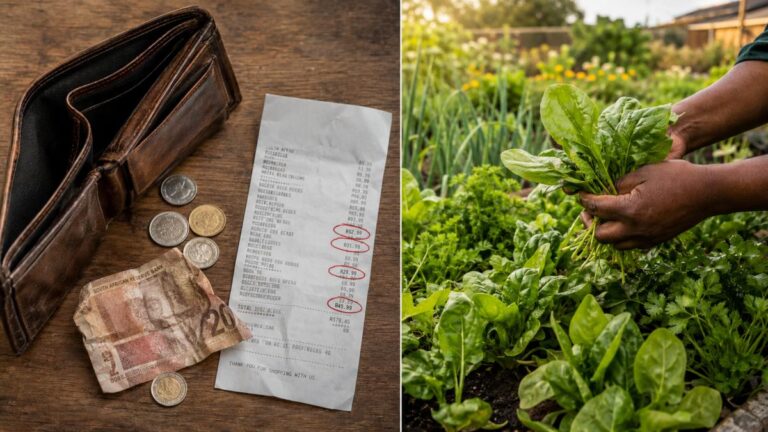
Start with food. The Pietermaritzburg Economic Justice and Dignity Group tracks a basket of staple foods that ordinary households actually buy, and in their May 2026 index that basket cost R5,479 a month. That is not a nutritious basket, mind you. The group notes that families routinely underspend on proper nutrition by around 17 percent because the money simply is not there. So for a family, food alone is eating R5,000 or more out of that living wage every single month, and still falling short of what is healthy.
Then energy. Electricity is the line item that has quietly mugged South African households for two decades. Eskom prices have climbed over 1,500 percent since 2000, roughly nine times faster than general inflation, and there is no sign of mercy. The regulator approved another 8.76 percent increase for direct Eskom customers from April 2026, with municipal customers facing 9.01 percent from July. A household paying R500 a month for electricity in 2000 would be paying around R8,000 for the same usage today. Whatever you spend on power now, plan on it growing faster than your salary every year for the foreseeable future.
Water is the slow burn. It is cheaper than food or power today, but municipal tariffs are climbing and supply is increasingly unreliable, which quietly forces households toward buying bottled water or backup supply during outages. It is a smaller number that is heading in an ugly direction.
Here is the part the living wage conversation misses entirely. Each of those big expenses can be attacked directly, and the savings compound.
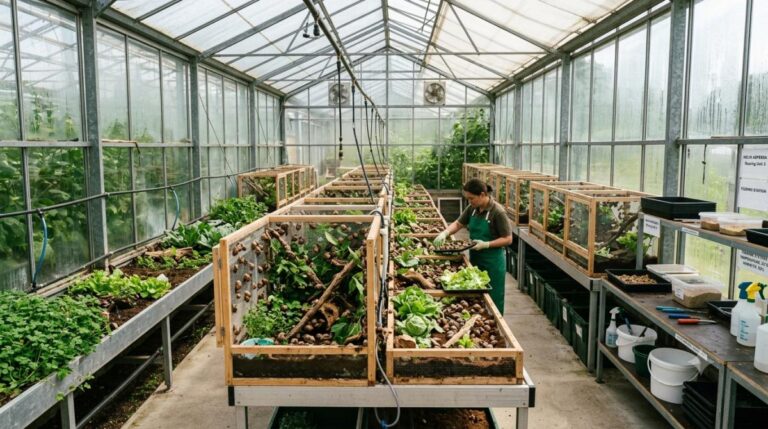
A productive food garden is the highest-leverage move most people can make, because food is the single largest controllable expense and it recurs forever. You will not grow everything. Nobody does. But a well-run garden growing leafy greens, tomatoes, herbs, beans, and a few staples like sweet potatoes can realistically take a meaningful bite out of that R5,000 grocery basket. Add laying hens and you have eggs and meat in a loop that runs on kitchen scraps and garden waste. The food you grow is also fresher and more nutritious than what the budget version of that basket contains, which closes the nutrition gap the affordability data keeps flagging.
Solar with battery backup is the energy equivalent. The upfront cost is real and it is the main barrier, but the logic is brutal and simple. Eskom has promised to keep raising prices faster than inflation indefinitely. A solar system is the one purchase that lets you opt out of that escalator. Every year the grid gets more expensive, your own generation gets relatively cheaper. A system that looks marginal at today’s tariffs looks like genius at the tariffs of 2030. And in many municipalities you can now feed excess generation back and earn credits, turning a cost centre into a small income stream.
Rainwater harvesting handles the water line and the reliability problem at once. Tanks plumbed off your roof give you a buffer against outages and shave the municipal bill, and greywater systems let the same litre of water work twice before it leaves your property. None of this is exotic. It is gutters, tanks, and a bit of plumbing.
The point is not that any single one of these makes you free. It is that stacked together they can pull thousands of rands a month out of your required income. If self-sufficiency strips, say, R6,000 to R8,000 off your monthly cost of living, then the R20,000 living wage you were told you needed becomes something closer to R13,000 or R14,000. You have not earned a cent more. You have just stopped needing as much.
There is a structural reason to prefer cutting expenses over chasing income, and it goes beyond the obvious tax advantage of saving versus earning.
Income is fragile. A salary depends on an employer, an economy, and continued health, and all three can vanish. The living wage research itself describes a poverty trap, a state where people earning below the threshold find it nearly impossible to climb out, partly because every spare rand is consumed by basic survival. Self-produced food, water, and power are the opposite of fragile. Once the garden is established and the panels are on the roof, they keep producing whether or not you have a job that month. They are a buffer that the income-only approach can never provide.
This is also why the homestead approach is quietly radical. The entire living wage debate is a negotiation about how much someone else, an employer or the state, should be made to pay you. That is a worthwhile fight. But it is a fight where you hold very little leverage. Lowering your own cost of living is a project where you hold all of it. You do not need permission, a sympathetic boss, or new legislation. You need a patch of ground, some water, a roof, and time.
The number says you need R20,000 to live decently in South Africa. For most people, that number is out of reach and likely to stay there. The better question is not how you reach it, but how far down you can drag it. Every garden bed, every solar panel, every water tank is a downward vote on that figure. And that is a vote you get to cast yourself.