Physical Address
304 North Cardinal St.
Dorchester Center, MA 02124
Physical Address
304 North Cardinal St.
Dorchester Center, MA 02124


Every plug-in hybrid advert in South Africa leans on the same pitch: fuel prices are brutal, PHEVs sip petrol, do the math and switch. What the adverts never show you is the other side of that math — the instalment. Run both sides properly and the honest answer for most SA households is uncomfortable: your old car, paid off and imperfect, is often the cheaper choice. But there’s a nuance worth exploring, and it involves a second, much cheaper car rather than one shiny new one.
The pitch has real substance behind it. PHEV entry prices in South Africa have fallen off a cliff — the segment’s floor dropped from over R1 million just a couple of years ago to the BYD Atto 2 DM-i now leading the market from R449,900, with the BYD Sealion 5 close behind at R509,900, offering roughly 50km of pure-electric range before its 1.5-litre engine kicks in. The theory is simple: commute on electrons, keep the tank for long trips, never queue at a fast charger.
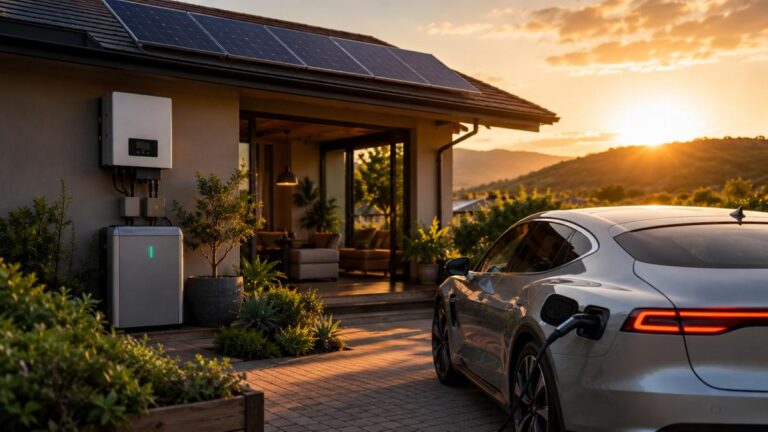
Here’s a general worked example any SA driver can adapt. Say you’re running an older diesel sedan or bakkie costing around R1,300–1,800 a month in fuel, doing a mix of short daily runs and one longer weekly trip. Swap it for an entry PHEV and your running costs genuinely drop — most of your daily driving becomes electric, charged either off the grid or, better, off home solar.
But price the instalment side honestly. With SA’s prime lending rate sitting at 10.25% as of May 2026, vehicle finance for an average buyer typically prices at prime plus 2%, landing around 12.25%. On a R450,000–R510,000 PHEV over a 72-month term, even with a decent trade-in against your old car, you’re looking at a monthly instalment in the R5,000–R10,000 range — before comprehensive insurance, which SA banks require on any financed vehicle and which typically adds another R800–R2,200 a month.
Compare that to a realistic fuel saving of a few hundred to around a thousand rand a month, and the arithmetic isn’t close. The new instalment usually swamps the fuel saving by an order of magnitude. This is the part most PHEV-vs-fuel articles conveniently leave out: they compare fuel cost to fuel cost, never fuel saving to instalment.
To be fair to PHEVs, there’s one scenario where this genuinely stacks up: if you were already planning to replace your car — it’s old enough that repairs are becoming a drain, or you need the extra safety and space anyway — then comparing a PHEV instalment against an equivalent petrol SUV’s instalment is the right comparison, and the fuel saving becomes a legitimate tie-breaker rather than the whole justification. If you weren’t already in the market for a new car, though, a PHEV rarely pays for itself on fuel alone.
This is where it gets more interesting than a straight PHEV-or-nothing choice. Most South African households don’t actually need every kilometre of every trip to come from the same car. If you’ve got one vehicle doing the long trips — the weekly office run, the road trip, the towing — and a second vehicle doing nothing but the school run and local errands, that second car never needs range at all.
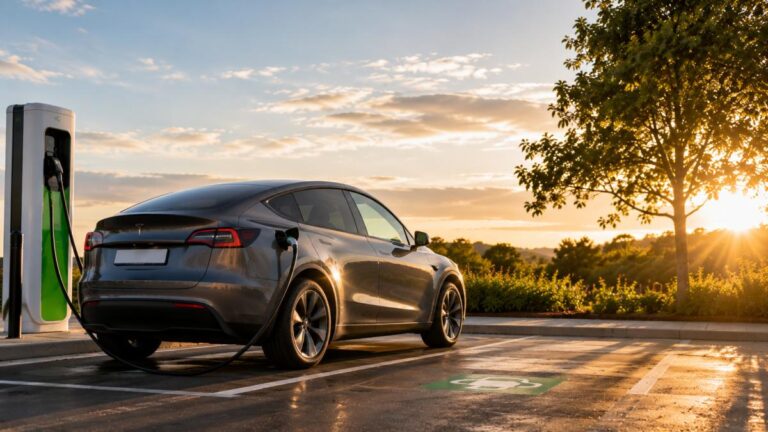
This is exactly the gap a genuinely cheap full EV fills. The BYD Dolphin Surf starts at R339,900 with a claimed 232km range, and the Geely E2 Aspire currently leads the affordability table at R339,900, complete with a free 7.4kW wallbox included in the price. Neither of those cars is trying to be your only vehicle. As a second car that never leaves town, 232km of range is enormous headroom — you’d charge it once or twice a week off a household solar surplus and effectively never buy fuel for local driving again.
Financed over the same 72-month term at a similar rate, a R340,000 EV carries a materially lower instalment than a R450,000–R510,000 PHEV, purely because the sticker price is lower and there’s no petrol engine adding cost. And unlike a PHEV, which still needs you to buy fuel for anything beyond its 50–100km electric range, a dedicated short-range EV run as a second car can be charged almost entirely on solar, with your existing older car left to do what it’s always done — the long trips, at whatever fuel cost that involves, without a new instalment attached to it at all.
Before you finance anything, work through this in order:
For a lot of SA households, the most financially sound move is the least exciting one: keep the older car for what it’s already good at, and if you want in on cheap local driving, put the money toward a genuinely inexpensive EV as a second car rather than a mid-range PHEV as a replacement. It won’t make for as flashy a launch event, but it’s the version of the math that actually holds up once the instalment is sitting next to the fuel bill instead of hidden behind it.