
Summer arrived early this year. By late October much of the country was already sitting through a heatwave, with the SA Weather Service urging caution as extreme temperatures gripped several provinces. December and January are usually hotter still.
For many households the obvious answer is an air conditioner. But aircon is expensive to buy and to run, it adds a heavy load to a solar system or a prepaid meter, and it does nothing when the power is off. A self-sufficient home works the other way around: it keeps heat out in the first place, so it needs very little energy to stay comfortable.
This guide covers the practical options, from free habits to weekend projects, and explains which ones work best in each part of the country.
Understand Where the Heat Comes From
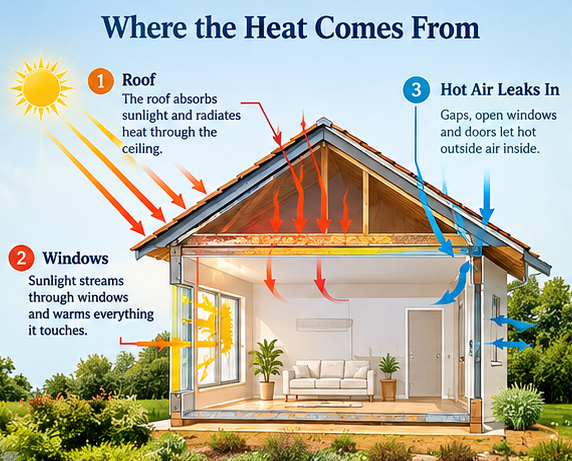
A house heats up in three main ways. Sun beats down on the roof and the heat radiates through the ceiling. Sunlight streams through windows and warms everything it touches. And hot outside air leaks in through gaps, open windows and doors.
The roof is usually the biggest culprit. A dark roof in full sun can get far hotter than the air around it, and an uninsulated ceiling passes much of that heat straight into the rooms below. Windows come next, especially those facing east and west, which catch low-angle sun that’s hard to block.
Once you know where the heat enters, the order of work is simple. Stop the heat at the roof, shade the windows from the outside, then manage the air.
Insulate the Ceiling First
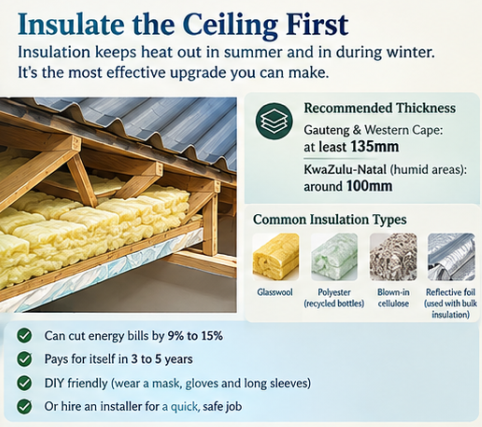
If your ceiling has little or no insulation, this is the single most effective upgrade you can make. It keeps summer heat out and winter heat in, so it pays you back all year round.
Insulation has been required for new homes under the SANS 10400-XA building regulations since 2011, and those rules also apply when older roofs are altered. Many homes built before then still have none, or a thin layer that has settled over the years. Estimates suggest proper ceiling insulation can cut a household’s annual energy bills by 9% to 15% and pay for itself within three to five years.
How thick should it be? It depends on your climate zone. A useful rule of thumb is at least 135mm in Gauteng and the Western Cape, and around 100mm in humid areas such as KwaZulu-Natal. Thicker performs better, and laying a second layer across the first helps close the gaps between rolls.
The main products are glasswool, polyester made from recycled bottles, blown-in cellulose, and reflective foil, which works best combined with bulk insulation. Rolls of glasswool or polyester are a manageable DIY job if you’re comfortable working in a roof space. Wear a mask, long sleeves and gloves, step only on the beams, and never cover downlighters or electrical junction boxes. If you’d rather not crawl around a hot roof, an installer can usually finish an average house in a few hours.
Make Your Roof Reflect the Sun
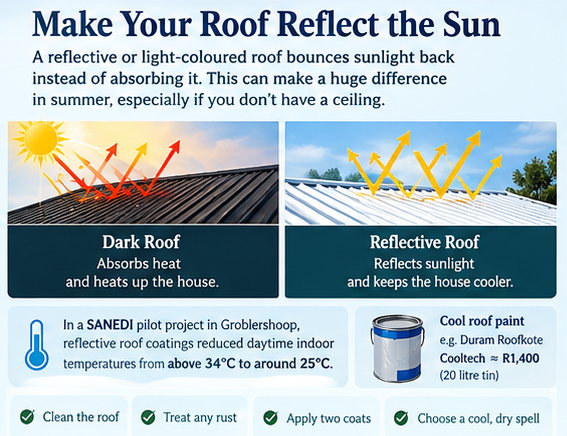
A dark roof absorbs sunlight and turns it into heat. A light or reflective roof bounces much of it back into the sky. This is one of the cheapest large improvements you can make, especially for homes with corrugated iron roofs and no ceiling.
The results can be dramatic. In a SANEDI pilot project in Groblershoop in the Northern Cape, reflective roof coatings brought daytime indoor temperatures down from above 34°C to around 25°C in low-cost homes. Researchers from the University of Cape Town are now testing the same approach in Khayelitsha and a village in Limpopo, looking at whether cooler homes reduce heat stress for the people living in them.
You don’t have to paint your roof brilliant white either. Several local brands now make “cool” roof paints in normal roof colours that still reflect a good share of solar heat. A 20 litre tin of a product such as Duram Roofkote Cooltech costs around R1,400, so budget for two coats and check the coverage on the tin against your roof area. Clean the roof thoroughly first, treat any rust, and pick a cool, dry spell for the job.
If the roof is due for repainting anyway, choosing a reflective product costs little extra and keeps working every summer afterwards.
Shade Windows From the Outside
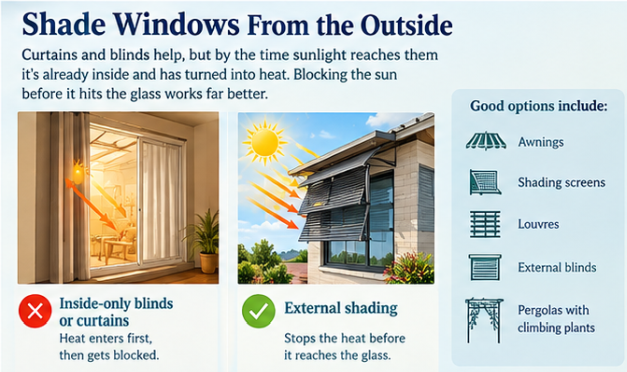
Curtains and blinds help, but by the time sunlight reaches them it’s already inside the house and has turned into heat. Blocking the sun before it hits the glass works far better, a point the SABS stresses in its summer advice on keeping buildings cool.
Each side of a South African home needs different treatment:
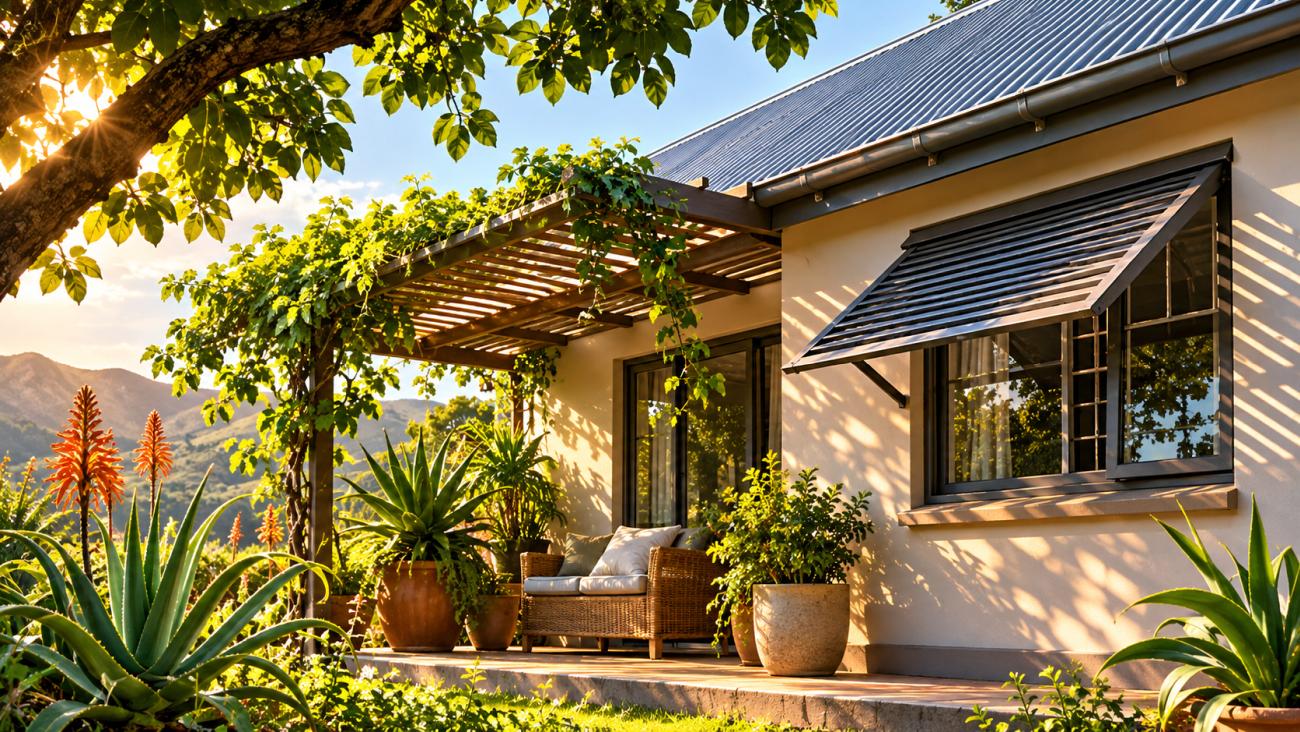
- North-facing windows get high midday sun in summer and low sun in winter. A fixed overhang, pergola or awning of the right depth blocks the summer sun and still lets winter sun in.
- East and west windows get low-angle morning and afternoon sun that slips under overhangs. These need vertical shading, such as outside roller blinds, shutters, louvres or a screen of plants.
- South-facing windows catch some early morning and late afternoon sun in midsummer, but are usually the easiest to manage.
Green Building Africa’s guide to external shading recommends adjustable shading where possible, because it lets you balance summer protection with winter warmth and daylight.
Shade cloth is the budget option. A length of 80% shade net stretched over a simple timber frame or tensioned on cables can shade a west-facing window, a patio or a wall for a few hundred rand. Leave a gap between the cloth and the wall so hot air can escape rather than getting trapped against the house.
Plant Your Own Air Conditioning
Trees, shrubs and climbing plants are the slowest cooling method to set up, but they’re the cheapest to run and they improve every year.
Shade from trees, combined with the moisture plants release, can cool the air around a house by several degrees. Remember that much of the advice online comes from the northern hemisphere, where the sun sits in the south. In South Africa it’s the reverse. Deciduous trees on the north side give summer shade and drop their leaves to let winter sun through. Lower, denser plants on the west side block the harsh afternoon sun.
Climbers are the fastest option. A vine on a trellis can shade a hot wall within a single season. Granadilla gives fruit as well as shade, and grape vines are deciduous, so they let winter sun through. Waterwise indigenous creepers suit drier regions. Keep dense growth slightly away from walls so moisture doesn’t build up against the house, and don’t plant trees where they will shade solar panels.
Use Ventilation Wisely
Opening windows doesn’t automatically cool a house. If the air outside is hotter than the air inside, you’re just letting heat in.
The trick is timing. Close up windows, doors and curtains on the sunny side during the hottest part of the day, then open the house in the evening and early morning when outside air is cooler. Open windows on opposite sides of the house to create a cross-breeze, and open high windows or roof vents so warm air can escape at the top. Sealing gaps around doors and windows also helps keep hot daytime air out.
How well this works depends on where you live:
- On the Highveld and in the Karoo, nights cool off sharply even after hot days. Flushing the house with cool night air works very well, and a house with heavy brick walls will stay cool well into the next afternoon.
- In Cape Town and the Western Cape, summers are mostly dry, so night ventilation also works well. The exception is hot berg wind days, when it’s best to keep the house sealed until the wind turns.
- In Durban, the KZN coast and the Lowveld, humid nights often stay warm, so night flushing helps less. Shade, insulation and constant air movement matter more here.
Choose the Right Fans
A fan doesn’t cool a room. It cools people, by moving air across the skin so sweat evaporates faster. That makes fans very cheap to run but only useful in rooms where someone is actually sitting. Switch them off when you leave.
Ceiling fans move air evenly around a room and use a fraction of the power of an aircon unit, which makes them easy to run off a small solar or inverter system. If yours has a reverse setting, make sure the blades push air downward in summer. Pedestal and desk fans are the cheapest place to start.
Be careful with evaporative coolers, sometimes sold as “air coolers”. They cool air by evaporating water, which works well in dry heat inland and in the Northern Cape. In humid coastal areas the air is already damp, so they add moisture and make a room feel stickier rather than cooler. Along the coast, a good ceiling fan is usually the better buy. The same principle powers a zeer pot, a clay fridge you can build for under R300 that needs no power at all, and it follows the same rule: dry air works, humid air doesn’t.
Small Habits That Add Up
Some of the most effective changes cost nothing at all:
- Cook outside on a braai, solar cooker or gas plate on hot days, or cook early in the morning
- Run the tumble dryer, dishwasher and oven in the evening, or skip them entirely in summer
- Switch to LED globes, which give off far less heat than old incandescent bulbs
- Move work, play and sleep to the coolest rooms in the house during heatwaves
- Hang wet washing indoors near an open window in dry areas for gentle evaporative cooling
- Drink water regularly and stay out of the sun during the hottest hours, usually 11:00 to 15:00
Where to Start
If you can only do one thing this summer, check your ceiling insulation. If it’s missing or thin, nothing else will match it. If the roof is due for a repaint, choose a reflective product. Then shade the east and west windows from the outside, and plant something that will be doing the job for free in a few years.
A home that stays cool on its own is cheaper to run, comfortable during power cuts, and much easier to power with solar. That’s what self-sufficiency is about: fewer systems to depend on and more comfort built into the house itself.
Disclaimer: This article is for general information only and is not professional building, electrical or medical advice. Working on roofs and in ceiling spaces carries a real risk of falls, heat exhaustion and electrical contact, so use proper safety equipment, never work alone, and call a qualified contractor if you’re unsure. Structural changes, new roof coverings and some external fixtures may require approval under the National Building Regulations or your municipality’s bylaws, and sectional title or estate homes may also need body corporate or HOA consent. Product prices and performance figures are indicative and were correct at the time of writing; check with suppliers before you buy. If anyone in your home shows signs of heat stroke, such as confusion, a very high body temperature or fainting, seek medical help immediately.