
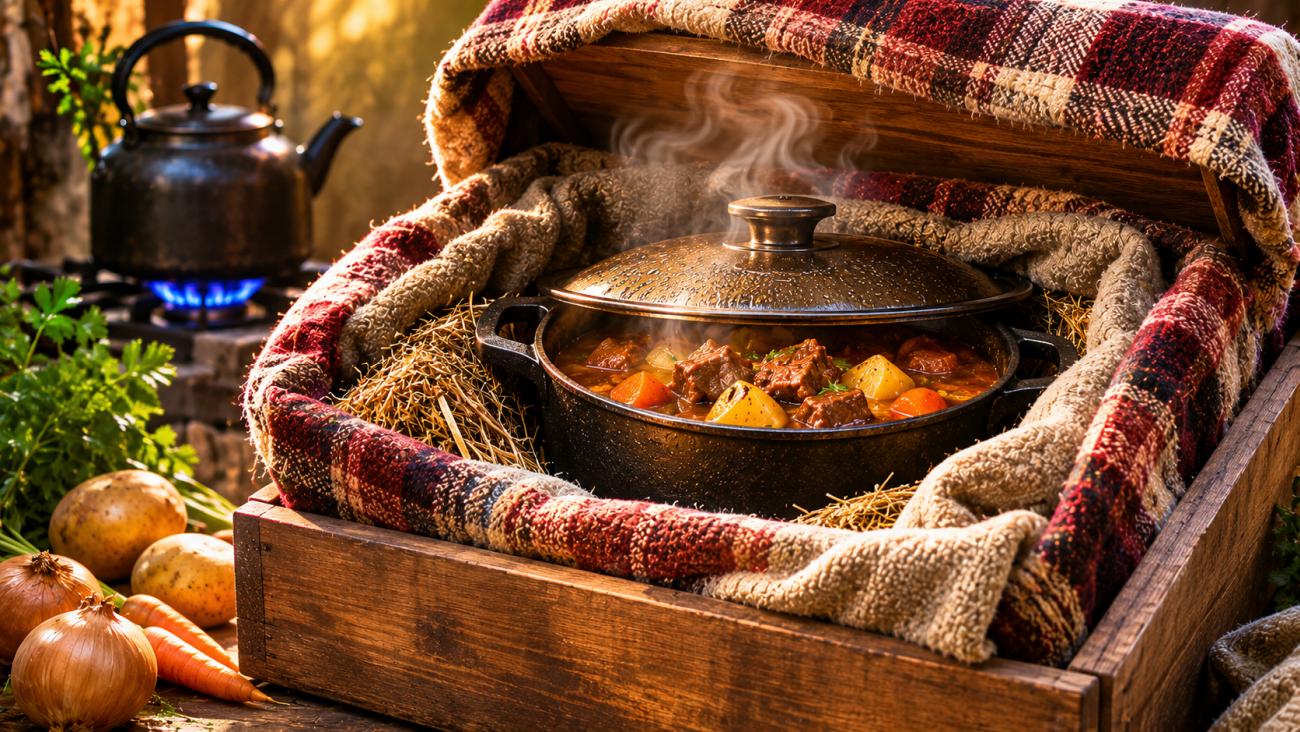

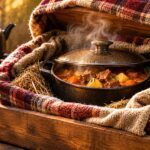
Long before electric stoves, cooks had a clever trick for slow-cooked meals. They brought the pot to the boil over the fire, then buried it in a box packed with hay. The insulation trapped the heat, and the food kept cooking for hours with no extra fuel at all.
The idea is just as useful in a modern South African kitchen. Electricity tariffs rose again this year, LPG is close to R38 a kilogram inland, and power cuts can still leave a half-cooked pot sitting on a cold plate. A haybox costs next to nothing to build, needs no power, and works anywhere in the country.
How Retained-Heat Cooking Works
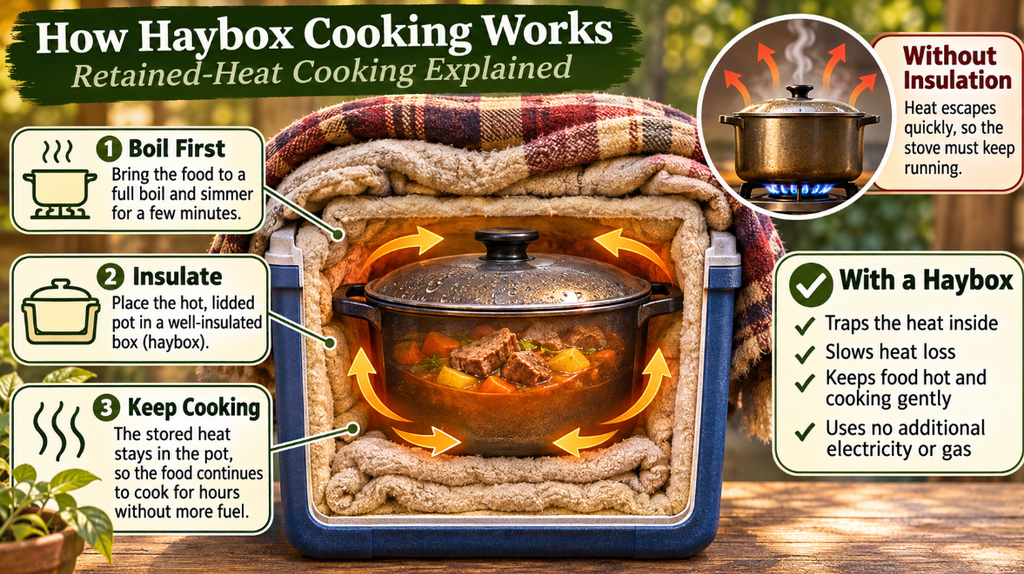
Most of the energy in slow cooking goes into keeping a pot simmering, not into heating it in the first place. Once the food reaches boiling point, it doesn’t need much more heat to finish cooking. It just needs to stay hot.
A haybox does exactly that. You bring the pot to a full boil on the stove, simmer it briefly, then move it into a well-insulated container and close it up. The heat stored in the food and liquid keeps cooking it slowly, much like a slow cooker that runs on stored heat rather than electricity.
The heat holds for a surprisingly long time. In a performance test of the South African-designed Wonderbag, four litres of boiling water took about nine hours to cool to 65°C inside the bag, compared with around two and a half hours left in the open.
A South African Invention, Reborn
Haybox cooking dates back centuries, but South Africa gave it a modern twist. During the electricity shortages of 2008, Sarah Collins noticed that a hot pot wrapped in cushions after the stove was switched off kept cooking. That experiment became the Wonderbag, a soft insulated bag filled with polystyrene beads that has since been distributed around the world.
You can buy a ready-made bag, but you don’t need one. A homemade box built from things already in the house does the same job.
How Much Energy Can You Save?
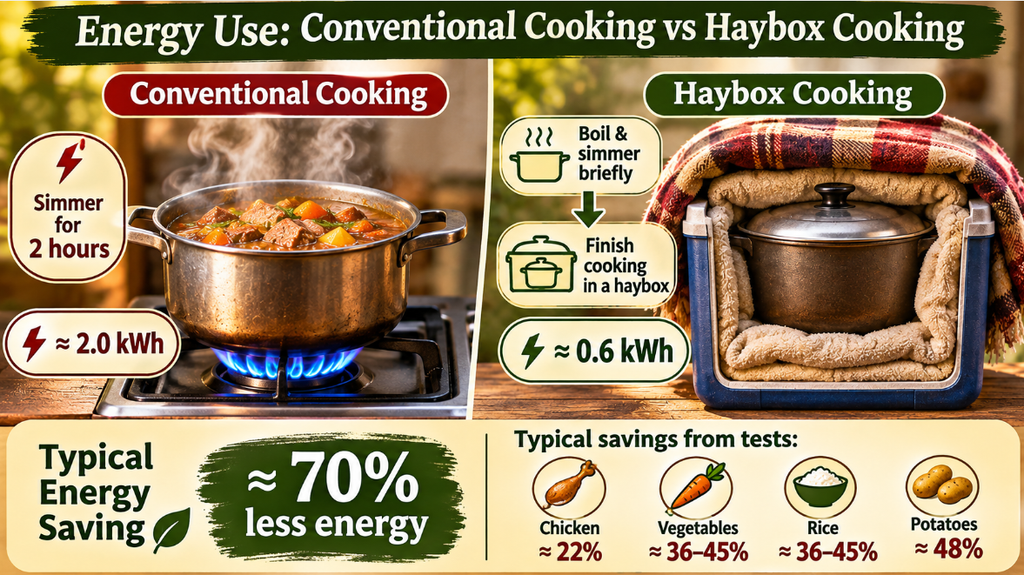
The same Wonderbag test compared cooking rice, potatoes, chicken curry and mixed vegetables conventionally and with the bag, on both an electric induction plate and an LPG stove. Energy savings ranged from 22% for chicken to 48% for potatoes, with most dishes landing between about 36% and 45%. Starchy foods and vegetables, which need long simmering, gave the biggest savings.
So “half” is the upper end, not a guarantee. What does that mean in rand? Here’s a rough example. A stew left simmering for two hours on an electric plate might use around 2kWh. Bringing it to the boil, simmering it briefly and finishing it in a haybox could cut that to about 0.6kWh. Electricity prices vary widely between Eskom Direct customers and municipalities, and municipal tariffs went up again in July, so at R3 to R5 a kilowatt-hour, that’s a saving of roughly R4 to R7 per pot.
That doesn’t sound like much until you multiply it. Used for twenty slow-cooked meals a month, a haybox could save around R80 to R140. Families who cook samp and beans, stews, soups and pap regularly will save more.
For gas users the maths is similar. In October the official LPG price was about R37.81 per kg in Gauteng and R34.56 at the coast, so a 9kg cylinder costs over R300 inland. If a haybox cuts the gas used for long-simmered dishes by a third or more, that cylinder lasts noticeably longer between refills.
The bigger benefit may not be the money at all. During a power cut, a pot that came to the boil before the lights went out can finish cooking in the box. And in summer, a stove that isn’t running for hours keeps the kitchen cooler.
Build Your Own Haybox
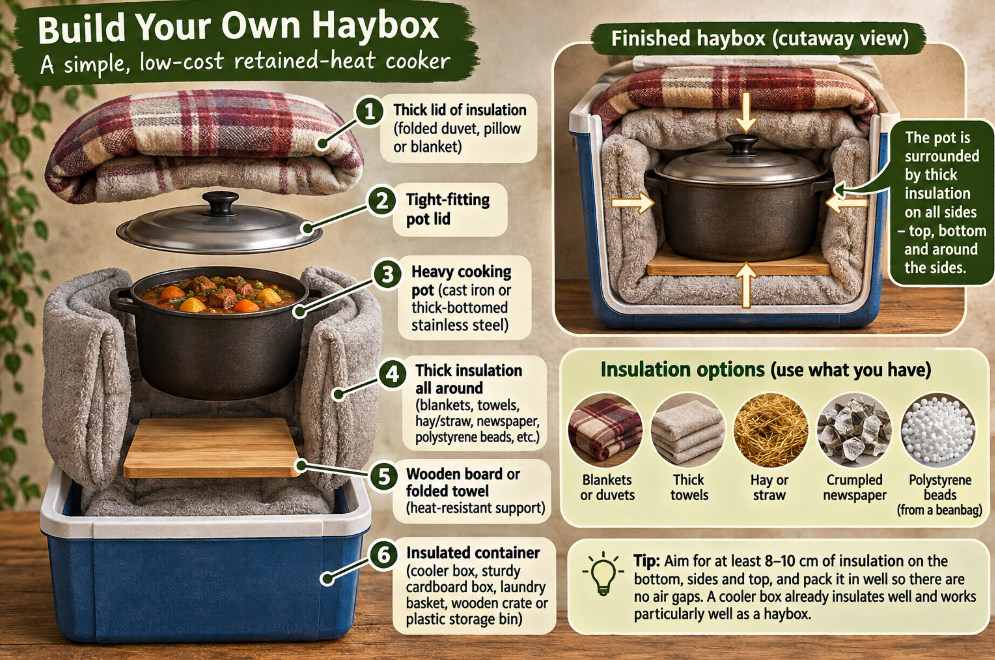
There’s no single correct design. The goal is simply to surround the pot with thick, air-filled insulation on every side, including the top and bottom.
What you need:
- A container a good deal bigger than your pot. An old cooler box is ideal because it’s already insulated. A sturdy cardboard box, laundry basket, wooden crate or plastic storage bin also works.
- Insulation. Old blankets, a duvet, pillows, thick towels, polystyrene beads from a worn-out beanbag, crumpled newspaper, wool, or the original choice of hay or straw.
- A heavy pot with a tight-fitting lid. Cast iron and thick-bottomed stainless steel hold heat best.
- A wooden board or folded towel to stand the hot pot on.
How to put it together:
- Line the bottom of the container with at least 8cm to 10cm of insulation.
- Place the board on top, then fit your pot in the middle.
- Pack insulation tightly around the sides so there are no air gaps.
- Make a thick “lid” for the top: a folded duvet, a pillow, or a cushion stuffed with polystyrene beads.
If you’re handy with a needle, two fabric bags filled with polystyrene beads, one forming a nest and one a lid, make a light and very effective version of the Wonderbag.
A practical tip from heat-retention cooking guides: after a session, feel the layers. If only the innermost layer is warm, your insulation is doing its job. If the outer layers are warm too, add more.
Using Your Haybox
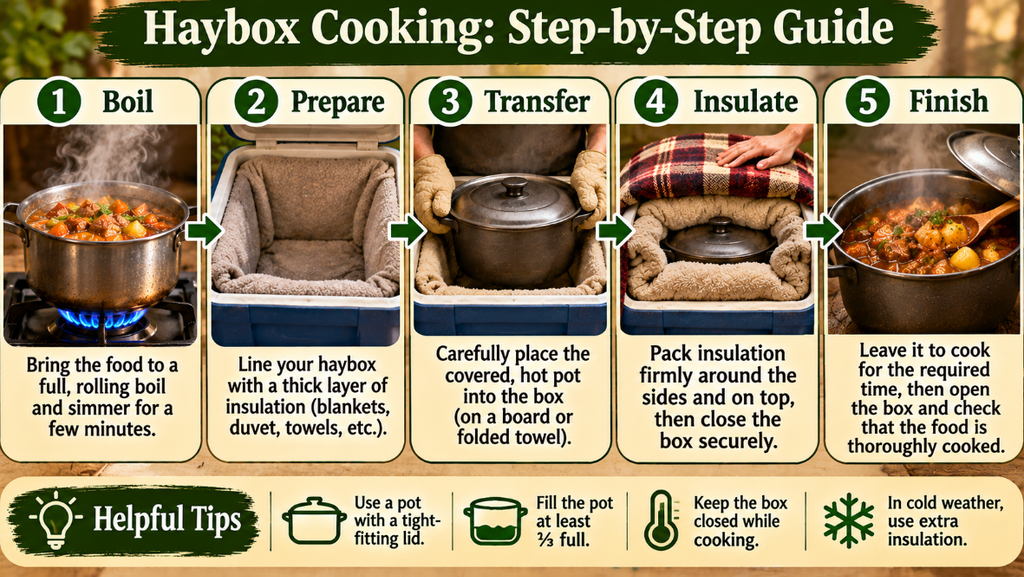
The basic method is the same for almost every dish:
- Cook the food as normal until it reaches a full, rolling boil.
- Let it boil or simmer for a few minutes so the heat soaks right through to the centre.
- Move the pot straight into the haybox with the lid on, and close the box quickly.
- Leave it alone. Every time you open the box you let heat escape.
- Check the food when the time is up. If it needs longer, bring it back to the boil and return it to the box.
A full pot holds heat far better than a half-empty one, so cook in batches and fill the pot to at least two-thirds. In cold weather, especially on Highveld winter nights, the pot cools faster, so use extra insulation or keep the box out of draughts.
Rough Cooking Times
Times vary with your pot, your insulation and the size of the pieces you cut, so treat these as starting points:
- Rice: Boil 5 minutes, then 30 to 45 minutes in the box.
- Potatoes and root vegetables: Boil about 10 minutes, then around 2 hours.
- Mieliepap or soft porridge: Bring to the boil while stirring, simmer 5 minutes, then 45 minutes to an hour.
- Oats: Boil for a minute at night and box them for a ready breakfast in the morning.
- Soups and vegetable stews: Simmer 10 to 15 minutes, then 2 to 3 hours.
- Meat stews and curries: Brown the meat, bring to a full boil, simmer 15 to 20 minutes, then 2 to 4 hours.
- Samp and beans: Soak overnight, drain, boil hard in fresh water for at least 30 minutes, then 3 to 4 hours in the box. Reboil and box again if needed.
Keep It Safe
Retained-heat cooking is safe when you respect a few basic rules. The risk comes from food that spends too long in the temperature range where bacteria multiply, roughly 5°C to 60°C.
- Always boil first. Bring the pot to a full boil and keep it there for at least 5 minutes before boxing it, longer for meat and large pieces.
- Don’t leave it too long. Food in a well-insulated box can still drop to around 50°C after five hours, according to tests reported by Low Impact. Plan for most dishes to be ready within three to four hours.
- Reheat meat dishes. If a meat dish has cooled below piping hot, bring it back to a boil before serving.
- Treat dried beans with care. Raw red kidney beans contain a natural toxin, and eating just a few undercooked beans can make you ill. The toxin is only destroyed by proper boiling, and food safety experts recommend boiling soaked kidney beans in fresh water for at least 30 minutes before any slow cooking. A haybox never gets hot enough to do this on its own.
- Handle hot pots carefully. Use oven gloves, keep the box out of children’s reach, and never put a pot into the box while it is still standing on a gas flame or hot plate.
Part of a Low-Energy Kitchen
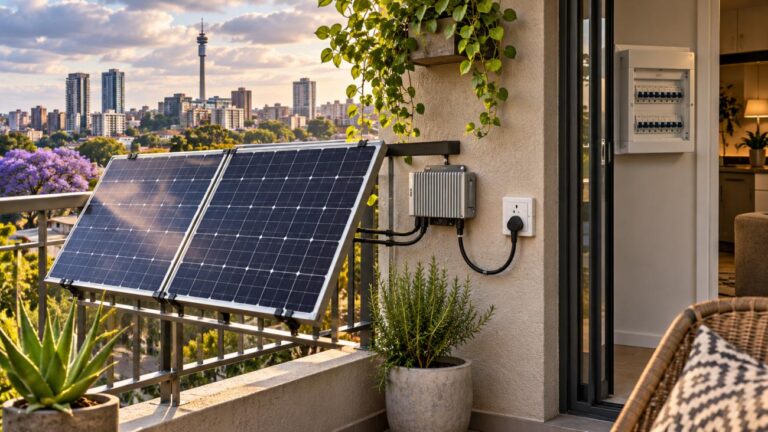
A haybox fits naturally into a kitchen that doesn’t depend on the grid. Pair it with a gas plate or a small solar system for the initial boil, a solar cooker on sunny days, and a zeer pot, a clay fridge you can build for under R300 that needs no power at all, and a surprising amount of everyday cooking and storage can carry on whatever the electricity supply is doing.
Start with a cooler box and a couple of old blankets this weekend. Try a pot of rice first, then a stew. Once you’ve seen a meal finish cooking with the stove switched off, you’ll wonder why you ever let a pot simmer for hours.
Disclaimer: This article is for general information only and is not professional food safety or medical advice. Retained-heat cooking relies on food being properly boiled before it goes into the box and kept hot until it’s eaten. Results depend on your pot, insulation, quantities and room temperature, so check that food is thoroughly cooked and piping hot before serving, and reheat it to boiling if in doubt. Take extra care when cooking for babies, older people, pregnant women or anyone with a weakened immune system. Energy savings and prices are indicative estimates and were correct at the time of writing; your own costs will depend on your tariff, appliance and cooking habits. Hot pots and boiling liquids can cause serious burns, so handle them with care and keep children away.

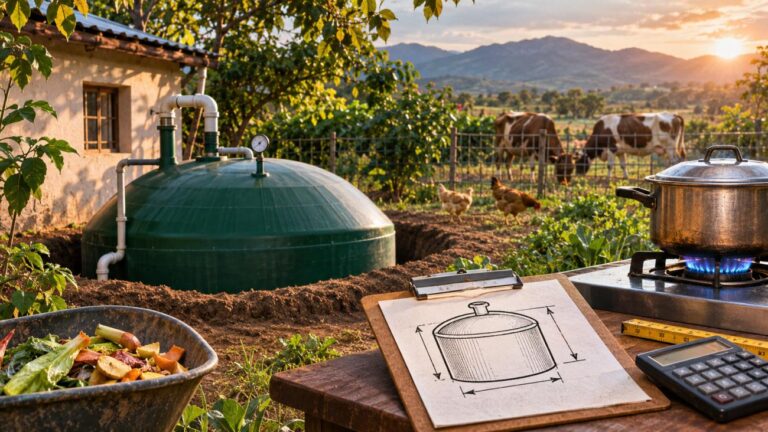



[…] pairs well with other ways to stretch cooking fuel. Haybox cooking can roughly halve the energy a long-simmering pot needs, which makes a modest biogas supply go much […]
[…] Cook with lids on, use a burner set up properly for biogas, and finish long-simmering dishes in a haybox, which can roughly halve the energy a pot […]