Physical Address
304 North Cardinal St.
Dorchester Center, MA 02124
Physical Address
304 North Cardinal St.
Dorchester Center, MA 02124

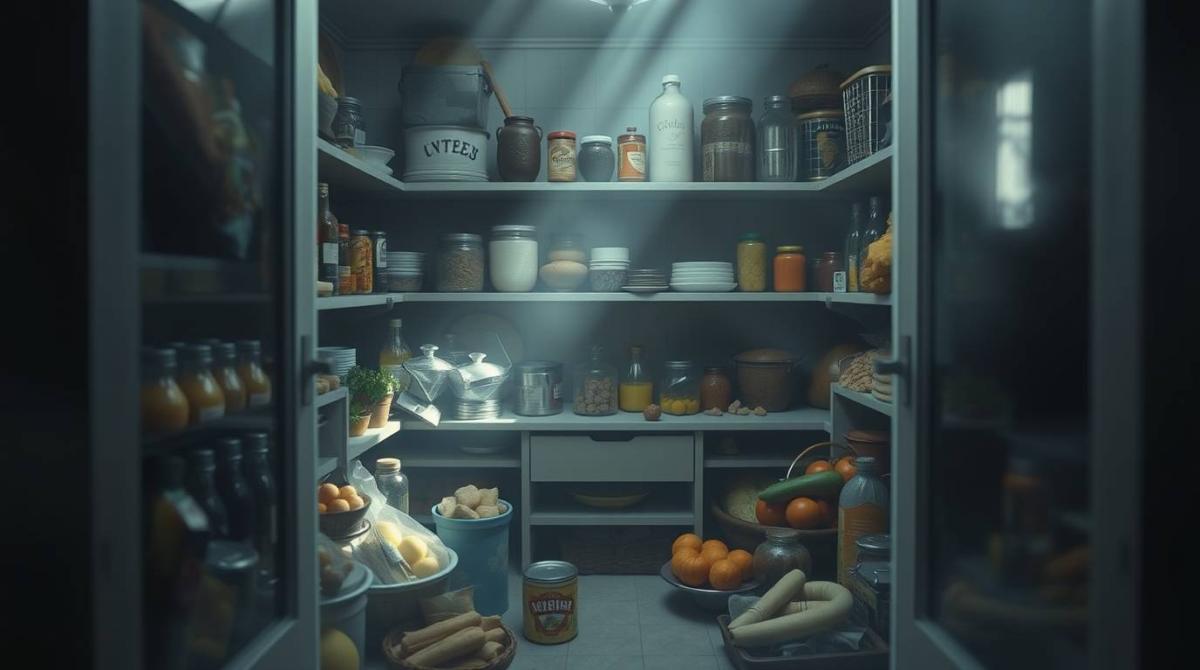
In February 2026, the average South African household food basket cost R5,383.81 per month. That number has increased by 75% since 2018. Wages have not kept up. Social grants have not kept up. And every time there is a fuel price hike, a drought, a port strike, or a supply chain disruption, the food you depend on either disappears from the shelf or jumps in price overnight.
In February 2026, the average South African household food basket cost R5,383.81 per month. That number has increased by 75% since 2018. Wages have not kept up. Social grants have not kept up. And every time there is a fuel price hike, a drought, a port strike, or a supply chain disruption, the food you depend on either disappears from the shelf or jumps in price overnight.
Most South African families live week to week. The money comes in, the groceries go out, and by the end of the month the cupboards are bare. There is no buffer. No margin. No safety net between your family and hunger if something goes wrong for even two or three weeks.
Building a three-month food buffer changes that equation entirely. It does not require a large once-off investment. It does not require a special storage room. It does not require buying freeze-dried survival meals from an American website. It requires buying a little more of what you already eat, every time you shop, and storing it properly so it lasts.
Here is how to do it practically, affordably, and in a way that works for a South African household of any size and any income level.
Three months is long enough to carry your family through the most common disruptions: a job loss that takes weeks to recover from, a supply chain interruption that empties certain shelves for a month, a price spike that makes staples temporarily unaffordable, or a period of illness that prevents you from shopping.
It is also short enough to be achievable. A three-month buffer of core staple foods for a family of four can be built over 8 to 12 weeks by adding R50 to R150 of extra staples to your normal weekly shop. You do not need to spend thousands of rands in one go. You build it gradually, and once it is built, you maintain it by rotating what you use and replacing what you take.
The Pietermaritzburg Economic Justice and Dignity Group tracks what South African women identify as the 17 core staple foods that households buy first: maize meal, rice, cake flour, white sugar, sugar beans, samp, cooking oil, salt, potatoes, onions, frozen chicken portions, curry powder, stock cubes, soup powder, tea, and bread (brown and white). Your three-month pantry starts with these items because they are what your family already eats, they are the cheapest calories available, and most of them store extremely well.
The backbone of any food buffer is dry staple foods that are cheap, calorie-dense, and have shelf lives measured in years rather than weeks. South Africa’s food culture is built around exactly these foods, which means building your pantry is not about buying strange new products. It is about buying more of what you already use.
White maize meal is the foundation of most South African households. A 10 kg bag costs approximately R80 to R110 and provides roughly 35,000 calories. Stored in a sealed container away from moisture and pests, maize meal lasts 12 to 18 months easily, longer if kept completely airtight. For a family of four eating pap regularly, 30 kg (three bags) covers roughly three months.
White rice is the second most important starch in South African homes. Women in the PMBEJD studies consistently report that they alternate between maize meal and rice because rice cooks faster and uses less electricity, which matters during load shedding. A 10 kg bag costs R100 to R150. White rice stored in a sealed container in a cool, dry place lasts up to two years or more. Three bags give you a three-month supply and cost R300 to R450.
Sugar beans and dried lentils are your protein source. Dried beans are nutritional powerhouses that provide protein, fibre, and iron. A 500 g bag costs R15 to R25. Dried beans stored in airtight containers last virtually indefinitely. They may take longer to cook as they age, but they remain safe and nutritious for years. Stock 6 to 8 kg for a three-month supply at a cost of roughly R200 to R300.
White sugar is essential for cooking, preserving, and tea. A 2.5 kg bag costs R35 to R50. Sugar stored in a sealed container lasts indefinitely. Three months’ supply for a household is 5 to 7.5 kg (two to three bags), costing R70 to R150.
Cooking oil (sunflower oil) is needed for virtually every meal. A 2-litre bottle costs R45 to R65. Unopened cooking oil lasts 12 to 18 months. Three months’ supply is roughly 4 to 6 litres, costing R90 to R195.
Cake flour extends your meal options to bread, dumplings, vetkoek, and pancakes. A 2.5 kg bag costs R25 to R40. White flour lasts 12 months or more stored in airtight containers. Stock 5 to 7.5 kg for three months.
Salt lasts forever when kept dry and costs almost nothing. Stock 1 to 2 kg and forget about it. Salt is also essential for food preservation if you start canning or pickling.
Samp is a traditional SA staple that stores well and provides excellent calories and fibre. A 2.5 kg bag costs R25 to R35.
Total cost for the dry staple foundation: approximately R900 to R1,500 for a family of four. This is the absolute core of your three-month buffer. These foods, combined with water and basic cooking fuel, will keep your family fed through any disruption.
A pantry of plain maize meal, rice, and beans will sustain you, but nobody wants to eat bland food for three months. The second layer of your pantry adds flavour, nutrition, and enough variety to keep meals interesting.
Canned foods are the workhorses of this layer. Canned pilchards (R15 to R25 per tin), canned baked beans (R12 to R18), canned tomatoes (R12 to R20), and canned vegetables all have shelf lives of two to five years. Stock 20 to 30 assorted tins and you have a protein and vegetable source that requires no refrigeration and minimal preparation. Stats SA’s inflation data shows that canned goods have remained among the most price-stable food categories, making them a smart investment.
Stock cubes, curry powder, and soup powder transform plain starches into flavourful meals. These cost R10 to R30 each and last well over a year. A box of Rajah curry powder, a few packets of Knorrox or Aromat, and a couple of boxes of soup powder add enormous value for very little money.
Tea and coffee are essentials for most South African households. Tea bags last two years or more. Instant coffee lasts 12 to 18 months. Stock a month’s extra supply and rotate.
Peanut butter is a high-calorie, high-protein food that stores for 12 months or more unopened. At R40 to R60 per jar, it is one of the most nutrient-dense pantry items you can buy.
Dried pasta and instant noodles add variety and cook quickly. Dried pasta lasts two to three years sealed. Stock 2 to 3 kg.
Powdered milk (like Cremora or Nido) lasts months to years sealed and provides dairy nutrition when fresh milk is unavailable.
Honey lasts indefinitely. It never spoils. A jar of local honey (R60 to R100) doubles as a sweetener, a spread, and a traditional remedy.
Total cost for the second layer: approximately R400 to R700. Combined with the dry staples, your complete three-month pantry costs roughly R1,300 to R2,200 for a family of four. Spread that over 8 to 12 weeks of shopping, and you are adding R110 to R275 per week to your normal grocery bill.
The biggest mistake people make with food storage is trying to build it all at once. That approach requires money most South African households simply do not have. Instead, use the “one extra” method.
Every time you shop, buy one extra of a long-lasting item you already need. If you are buying a 10 kg bag of maize meal, buy one more. If you are buying cooking oil, add one extra bottle. If canned pilchards are on special, grab three tins instead of one. This incremental approach spreads the cost naturally across your normal grocery spending and builds your buffer over two to three months without any single shop feeling painful.
Watch for specials aggressively. South African retailers like Shoprite, Checkers, Pick n Pay, and Boxer run specials on staples regularly. When 10 kg rice drops by R20 or sugar beans are buy-two-get-one-free, that is your moment to add to the buffer. Keep a simple list on your phone of what you still need for your three-month target, and check it against the weekly specials before you shop.
Stokvels can accelerate this process dramatically. If ten members each contribute R100 per month toward bulk staple purchases, the group can buy in larger quantities at lower per-unit prices and distribute the food across all households. This is the Ubuntu approach to food security, and it works.
South Africa’s climate creates two main enemies for stored food: heat and pests. Johannesburg’s warm summers, Durban’s humidity, and the universal problem of weevils, cockroaches, and rodents can destroy a pantry if you do not store food correctly.
Airtight containers are essential. Transfer all dry goods from their paper or plastic bags into sealed containers as soon as you get them home. Weevils can chew through paper and thin plastic bags within days. Large plastic buckets with clip-on lids (available from Builders Warehouse for R30 to R60) work well for bulk items like maize meal and rice. Glass jars with screw-top lids are excellent for smaller quantities. Even 2-litre plastic cooldrink bottles, cleaned and dried, can store rice, beans, and sugar effectively.
Bay leaves placed inside stored grain and flour containers act as a natural weevil deterrent. Drop two or three dried bay leaves into each container.
Store in the coolest, driest part of your home. A bottom kitchen cupboard, a shelf in a shaded spare room, or the floor of a wardrobe all work. Avoid storing food in garages (too hot in summer), bathrooms (too humid), or anywhere in direct sunlight.
Label and date everything. Write the purchase date on each container with a permanent marker. Use the “first in, first out” principle: always consume the oldest stock first and replace it with new purchases at the back of the shelf.
Rotate, do not hoard. Your pantry should not be a static collection that sits untouched for years. Cook from it regularly, using the oldest items first, and replace what you use. This keeps everything fresh, ensures nothing expires, and means your family is already accustomed to eating the foods you have stored.
Protein is the most expensive and most perishable component of the South African diet. Fresh and frozen meat does not store without refrigeration, and load shedding makes freezer-dependent protein storage unreliable.
Focus on shelf-stable protein sources for your buffer. Canned fish (pilchards, tuna, sardines) lasts two to five years. Canned corned beef lasts three to five years. Dried beans, lentils, and chickpeas provide excellent plant-based protein and last indefinitely. Peanut butter provides protein and healthy fats. Powdered milk adds dairy protein.
Biltong and droëwors, when properly dried, can last weeks to months without refrigeration, though they are expensive to buy. If you make your own, the cost drops significantly and you control the quality. The South African tradition of preserving meat through drying is one of the oldest and most effective food storage methods on the continent.
Eggs deserve a mention. Fresh eggs stored at room temperature (unwashed, with the bloom intact) last two to three weeks. If you have space for even two or three laying hens, they provide a self-renewing protein source that no pantry can match.
There is something that changes in a household when the cupboards are full. The low-level anxiety of wondering whether you will make it to month-end lifts. The panic buying during supply disruptions disappears because you already have what you need. The ability to say no to an overpriced item because you know there is a backup at home gives you genuine negotiating power as a consumer.
A three-month food buffer is not about fear. It is about freedom. Freedom from the weekly cycle of money in, food out, cupboards bare. Freedom from the vulnerability that comes with living hand to mouth in a country where food prices have risen 75% in seven years while the national minimum wage has barely moved.
It is also the foundation for everything else on the self-sufficiency journey. Once you have a food buffer, you can start growing your own fresh vegetables without the pressure of needing them to survive. You can experiment with preserving, fermenting, and foraging. You can think longer-term about energy independence and water security because the most basic need, food, is already covered.
Here is a complete checklist for a family of four. Adjust quantities up or down based on your household size and what your family actually eats.
Dry staples: 30 kg maize meal, 30 kg white rice, 7.5 kg cake flour, 7.5 kg sugar, 7.5 kg samp, 6 to 8 kg sugar beans or lentils, 6 litres cooking oil, 2 kg salt.
Canned goods: 10 tins pilchards or sardines, 10 tins baked beans, 6 tins canned tomatoes, 6 tins mixed vegetables or corn.
Flavour and variety: Curry powder, stock cubes, Aromat or similar seasoning, soup powder (4 to 6 packets), dried pasta (3 kg), instant noodles (10 to 15 packets), peanut butter (2 jars), honey (1 jar), tea (100+ bags), instant coffee (1 tin), powdered milk (1 kg).
Estimated total cost: R1,300 to R2,200.
Build timeline: 8 to 12 weeks by adding R110 to R275 per week in extra staples to your normal grocery shop.
Building a three-month food buffer is the single most practical step any South African household can take toward self-sufficiency. It costs less than a month’s normal grocery bill, it can be built gradually over two to three months, and it provides genuine security against the disruptions that are becoming more frequent in this country.
You do not need to be a prepper. You do not need a bunker. You need extra maize meal, rice, beans, oil, sugar, salt, and tins in your cupboard, stored properly, rotated regularly, and replenished as you use them.
Start this week. Buy one extra bag of rice. One extra bottle of oil. One extra packet of sugar beans. Put them in a sealed container in a cool, dark spot. Do the same next week. And the week after that. Within three months, you will have something that most South African families do not have: a cushion between you and a system that has shown, repeatedly, that it cannot be relied upon to look after you.
That is what self-sufficiency starts with. Not a solar panel. Not a vegetable garden. A full cupboard.