Physical Address
304 North Cardinal St.
Dorchester Center, MA 02124
Physical Address
304 North Cardinal St.
Dorchester Center, MA 02124

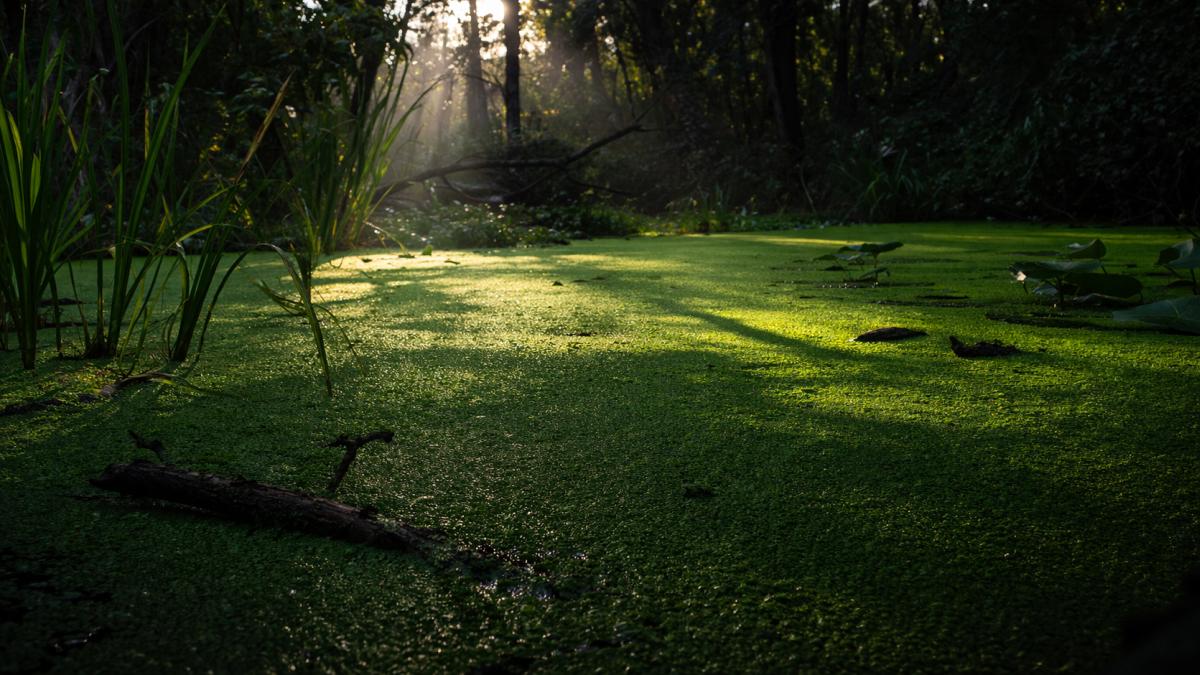
It floats silently on ponds, dams, and slow-moving streams across South Africa. Most people walk right past it without a second glance, assuming it is nothing more than pond scum or algae. But duckweed, the diminutive aquatic plant that blankets freshwater surfaces in a vivid green carpet, is quietly being recognised by researchers and food scientists as one of the most extraordinary protein sources the plant kingdom has ever produced.
If you are on a journey toward greater food self-sufficiency, cutting your grocery bill, or simply want to feed your household better from fewer resources, duckweed deserves your full attention.
Duckweed belongs to the Lemnaceae family, a group of small, free-floating aquatic flowering plants. It is one of the simplest plant structures in existence: a tiny oval frond, usually no bigger than a fingernail, with a hair-thin root that never anchors to the ground. There are approximately 36 recognised species worldwide, grouped into five genera: Spirodela, Landoltia, Lemna, Wolffiella, and Wolffia. The tiniest species, Wolffia (sometimes called watermeal), is actually the smallest flowering plant on earth.
You will find duckweed naturally occurring across South Africa in dams, irrigation channels, garden ponds, and river backwaters, particularly in Gauteng, KwaZulu-Natal, and the Western Cape. Farmers have long regarded it as a nuisance. The self-sufficiency movement is beginning to see it very differently.
Here is where the story gets remarkable. Under optimal growing conditions, duckweed can contain up to 45% protein by dry weight. Studies have shown that one hectare of duckweed can produce between 10 and 18 tonnes of protein per year, compared to soybeans which produce just 0.6 to 1.2 tonnes per hectare. Let that land for a moment. Duckweed produces, per hectare, up to 30 times more protein than soy.
According to Wageningen University, duckweed is six times more efficient than soy due to its very high protein content. When you factor in land use, water consumption, and the absence of any need for synthetic fertiliser, the picture becomes even more compelling for the home grower or small-scale farmer working toward genuine food independence.
Among the most studied species, Lemna minor exhibits a protein content ranging from 35 to 45% of dry weight, while Wolffia arrhiza can reach protein concentrations of up to 51% under nitrogen-rich conditions. No common terrestrial crop comes close to these figures. Chickpeas sit at around 19% protein by dry weight. Lentils reach roughly 25%. Even hemp seeds, celebrated in the wellness world, land at approximately 31%.
Protein quantity means little without quality. The body requires all nine essential amino acids that it cannot synthesise on its own. Many plant proteins are incomplete, meaning they are deficient in one or more of these amino acids.
[See the Other Plant that Contains All Nine Essential Amino Acids]
Duckweed, particularly the Mankai species (Wolffia globosa), contains all nine essential amino acids, making it a complete protein source comparable to animal products. Its amino acid bioavailability has been confirmed in published nutritional research, meaning those amino acids are readily absorbed and used by the body rather than passing through unutilised. This makes it one of very few plants that can stand alongside eggs, meat, and dairy in terms of amino acid completeness, a distinction that matters enormously for plant-based households trying to ensure balanced nutrition without supplements.
The protein story is compelling enough on its own, but duckweed does not stop there. Beyond protein, it is a valuable source of vitamin B12, which is rare in plants, as well as iron, zinc, omega-3 fatty acids, and powerful antioxidants including lutein, zeaxanthin, and polyphenols.
Vitamin B12 in a plant source is extraordinarily unusual. It is one of the primary nutritional concerns for those reducing or eliminating animal products from their diet, and duckweed addresses it directly. The omega-3 fatty acid content also sets it apart from nearly all other plant proteins, which typically offer only ALA rather than the longer-chain forms more readily used by the body.
Duckweed also contains approximately 35% carbohydrates and 20% minerals by dry weight, making it nutritionally comparable to soybeans and a well-rounded addition to both human and animal diets.
If you keep chickens, pigs, or ducks (appropriately enough), duckweed can form a significant part of their feed, reducing your reliance on commercial pellets and closing the loop on your homestead’s nutrient cycle.
This is where duckweed transitions from interesting science to practical self-sufficiency. It is, without exaggeration, one of the easiest crops you will ever grow. The quantity of duckweed in a pond can double in less than 48 hours under optimal conditions, a growth rate that no vegetable garden can match.
To grow duckweed at home, you need:
A container with still or slow-moving water. An old bathtub, a plastic drum, a lined raised bed, a garden pond, or any shallow basin holds water and catches sunlight. Duckweed does not thrive in fast-flowing water.
A starter culture. Harvest a handful from a local dam or pond, or source it from an aquaponics supplier. Once you have a small starter, it propagates itself almost without any effort.
Nutrients in the water. Duckweed thrives in nutrient-rich water. This makes it an ideal companion for an aquaponics system, where fish waste provides the nitrogen that drives protein synthesis. You can also add diluted compost tea or wood ash to plain water. Avoid water from chemically treated municipal sources without first letting it dechlorinate in the sun for 24 hours.
Sunlight. At least four to six hours of direct sun per day. South African summers are ideal. Growth slows in the cooler months but does not stop entirely in Gauteng’s mild winters.
Harvest by skimming the surface with a fine mesh strainer or kitchen sieve. Rinse the duckweed well with clean water before consuming or feeding to animals. Rotate your harvest so that roughly half the surface remains covered, giving the colony room to keep multiplying.
For those serious about integrating duckweed into a broader food garden, it pairs particularly well alongside other high-yield, low-effort perennial crops. If you are not yet growing Jerusalem artichokes, read our guide on sunchokes: the easiest perennial vegetable for South African gardens for another crop that fits the same self-sufficiency philosophy.
Duckweed has a neutral flavour, not dissimilar to leafy greens. It is not unpleasant, and it does not taste like pond water when properly rinsed and prepared. In Southeast Asia, where Wolffia species have been eaten for centuries, it is used fresh in salads, cooked into soups, stirred into rice dishes, or dried and ground into a powder added to smoothies and baked goods.
For the South African homesteader, the most practical approaches are:
Dried powder. Harvest, rinse, and spread thinly on a clean surface in full sun to dry. Once fully dry and crumbly, grind in a blender and store in an airtight jar. Add a tablespoon or two to smoothies, porridge, or bread dough for a protein boost.
Fresh in salads. Freshly rinsed duckweed can be added directly to salads or mixed into green wraps. Its small size means it blends in without much textural impact.
Cooked into soups and stews. Stir fresh or dried duckweed into a simmering pot in the final few minutes of cooking. It softens quickly and adds protein without altering the flavour profile significantly.
One important caution: for human consumption, duckweed must be grown under controlled, sanitary conditions. The Alberta Institute for Wildlife Conservation notes that duckweed readily absorbs whatever is present in its water environment, which makes source water quality the single most important factor in safe consumption. Do not harvest from roadside drainage ditches, polluted streams, or water bodies near industrial activity. Grow your own from a clean water source and you control exactly what goes into it.
A detailed review in the Journal of Agricultural and Food Chemistry confirms that duckweed can be cultivated in non-arable environments, does not compete with food crops for land and freshwater resources, and offers significant environmental benefits including wastewater bioremediation and nutrient recycling. In a country like South Africa, where water scarcity, food price inflation, and soil degradation are pressing realities, a crop that thrives on wastewater, demands no tillage, and outproduces soy by a factor of 30 per hectare is not just interesting. It is urgent.
The plant the food industry is quietly racing to commercialise is already growing wild in South African dams and garden ponds. With nothing more than a clean container, some sunlight, and a small starter culture, you could be harvesting your own complete protein within a week. That is what genuine food independence looks like.