Physical Address
304 North Cardinal St.
Dorchester Center, MA 02124
Physical Address
304 North Cardinal St.
Dorchester Center, MA 02124

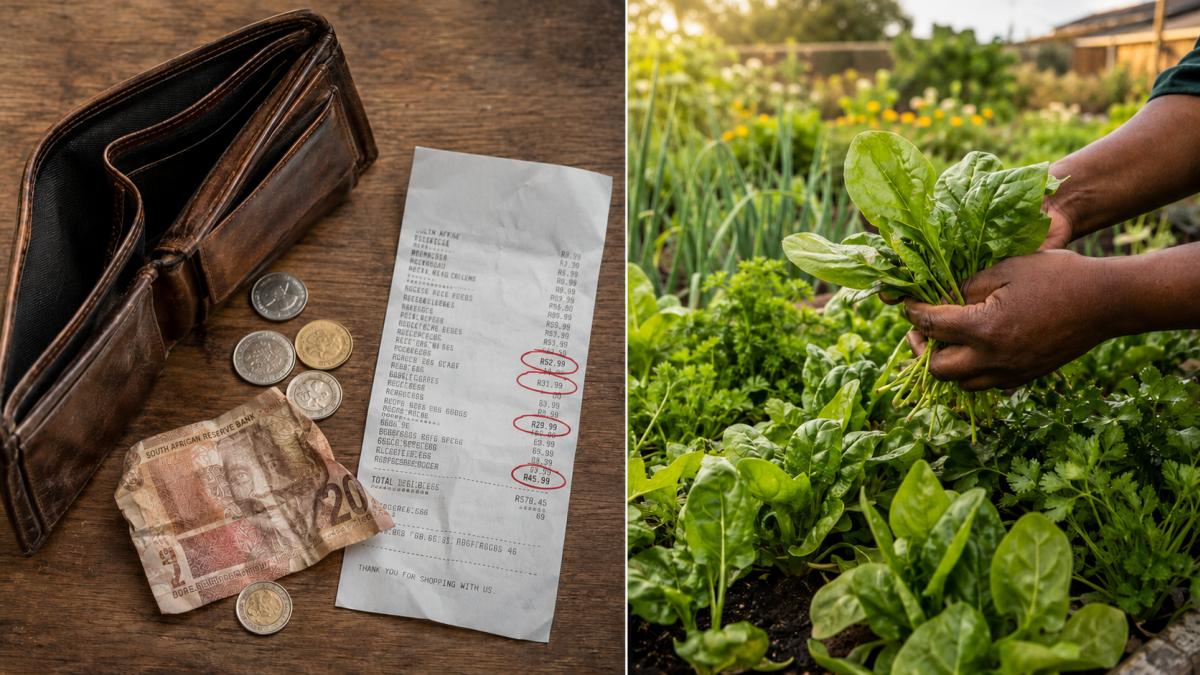
The phrase has gone viral for a reason. Mampara week, that stretch between when the money runs out and when the next salary lands, has become the shared joke and shared trauma of South African working life. Recent commentary from debt counsellors confirms what most households already know: more than six in ten of us run out of money before month-end, and many burn through it within the first week of payday.
The usual advice is to track every rand, lock down spending for the first five days, and prioritise essentials. Useful, but incomplete. Tracking shows you the bleeding. It doesn’t stop it. If your fixed debit orders eat most of your salary the moment it lands, no amount of mindful budgeting in the remainder will get you ahead.
Self-sufficiency is the lever the budgeting conversation almost never reaches for. It works on the supply side of your household economy, not the discipline side. And critically, it works at every income level.
Look at your bank app the day after payday. Rent or bond, transport, school fees, insurance, medical aid, data, electricity, debt repayments. By the time the dust settles, most South African workers have a fraction of their salary actually available to spend. The relief of seeing a balance climb back up is mostly an illusion, because that balance is already promised to other people.
The conventional fix is to squeeze the leftover discretionary spend harder. That works to a point. But the bigger prize sits in the fixed costs themselves. Every rand you remove from a monthly bill is a rand of permanent salary increase, and it compounds every month for the rest of your life. That is what self-sufficiency actually delivers.
Groceries are the largest semi-flexible expense in most South African households. The latest Stats SA CPI data shows the price of a basic basket continuing to outpace wages. You cannot control wheat futures or the rand, but you can control how much of your plate comes from a shop.
You don’t need a smallholding. A two by three metre patch grows enough spinach, kale, spring onions, and herbs to take a noticeable bite out of a weekly grocery run. Indigenous leafy greens like amaranth and even garden weeds such as blackjack are nutritionally serious food that grows on rainfall alone in most of South Africa. Sunchokes (Jerusalem artichokes) once planted will feed a family for years with almost zero input. The Department of Agriculture publishes a free household food production guide that covers basic vegetable selection for South African climate zones.
For renters or flat dwellers, our balcony gardening guide walks through what produces meaningfully in pots versus what is a waste of time. Even a windowsill of herbs cuts the irritating supermarket coriander purchase that nobody enjoys making.
Bulk staples matter just as much. A 12.5kg bag of mealie meal, a 10kg sack of rice, a 5kg bag of sugar beans, all bought once at the start of a month, cost roughly 30 to 40% less per meal than buying smaller packs weekly. That single shift in how you shop reclaims real money without growing anything.
Municipal water in Gauteng and the Western Cape is no longer cheap, and the supply is no longer reliable. A modest rainwater harvesting setup, even a single 2,500 litre JoJo tank fed from a section of roof, captures hundreds of litres in a typical Highveld summer thunderstorm. That water flushes toilets, irrigates the garden, and provides backup when the municipality fails.
The Department of Water and Sanitation publishes rainwater harvesting guidelines for residential systems that cover legal requirements and basic sizing. The capital outlay is real, but the payback is in both rand savings and the value of not running out of water mid-week.
For renters this is harder, but even a few 200 litre drums under downpipes give you garden water for free and reduce your municipal usage enough to drop a tariff block.
Full off-grid solar is not realistic for most South Africans. That should not stop anyone from picking off the easy energy wins.
A solar geyser or geyser timer cuts the single biggest electricity user in most homes by 30 to 60%. A small LPG hob removes cooking from the Eskom bill entirely. LED globes are now cheap and pay back within a year. A rocket stove or a small braai for batch cooking on weekends takes another bite. None of this requires capital you don’t have, and none of it requires you to wait for government or for the load shedding cycle to end.
For those with savings or access to credit at reasonable rates, a small hybrid inverter and battery setup is now within reach of a middle income household and produces immediate, measurable monthly savings. The principle stays the same at every scale: every kilowatt-hour you don’t buy from Eskom is a permanent reduction in your fixed monthly outflow.
A surprising amount of South African household life still runs outside the cash economy, and self-sufficiency means using that deliberately rather than by accident.
Lift clubs. Stokvels for bulk grocery buying. Skill swaps where one neighbour fixes appliances and another cuts hair. Tool sharing instead of each household owning a drill that gets used twice a year. Communal vegetable patches in townhouse complexes. Bartering of garden produce. These are not new ideas, but most middle income households have drifted away from them because credit made it easier to just buy everything individually.
Rebuilding even one of these networks in your street or block measurably reduces what you need to earn to live well.
There is a particular pattern that catches most working South Africans. Payday arrives, debit orders go off, and the small remainder feels like a windfall. A meal out, a treat for the kids, a bottle of something nice. By mid-month the regret arrives, and short-term credit fills the gap, and the next salary lands already partly spent.
The deeper fix is not willpower. It is structural. When your fixed costs are lower because your geyser, garden, and water tank are quietly working for you, the surplus after debit orders is real. Spending some of it without guilt is no longer a setup for disaster. The original Moneyweb conversation with National Debt Advisors is worth a listen for the psychology of relief spending, but the way out is on the supply side, not the discipline side.
Pick one line item. Just one. Trying to do everything at once is how good intentions die.
If money is tight, plant five rand worth of spinach seed in any container with soil, switch to bulk staples on your next shop, and find one neighbour to share a lift with. Total cost under R200, monthly saving probably R400 to R800.
If you have some room to invest, fit a geyser timer, buy a 2,200 litre rainwater tank, and start a 4 square metre vegetable patch. Capital under R8,000, monthly saving R500 to R1,200, payback inside two years.
If you have real capital, a small hybrid inverter, solar geyser, and a serious food garden together will typically remove R2,000 to R4,000 per month from your fixed costs. Direct those savings at your highest interest debt and the snowball moves fast.
The National Credit Regulator is the place to go if debt is the immediate fire to put out. But assume that even after a debt review or restructure, you will still need lower fixed costs to stay out of the cycle. That is the work self-sufficiency does.
Mampara week is not a personal failing. It is what happens when wages drift below the cost of living for long enough. Personal discipline matters, but it cannot close a structural gap on its own. Self-sufficiency closes that gap from the other side, one geyser timer, one rainwater tank, one row of spinach at a time.
The point is not to escape the formal economy. It is to give yourself a buffer big enough that one slow month, one car repair, or one electricity hike doesn’t drop you back into payday survival mode. That buffer is freedom, and it is built from the supply side, not the budgeting app.









[…] and adding a small income stream that fits a homestead lifestyle. It builds on our earlier piece on why mampara week won’t fix itself, which tackles the fixed costs that swallow a salary on […]