Physical Address
304 North Cardinal St.
Dorchester Center, MA 02124
Physical Address
304 North Cardinal St.
Dorchester Center, MA 02124

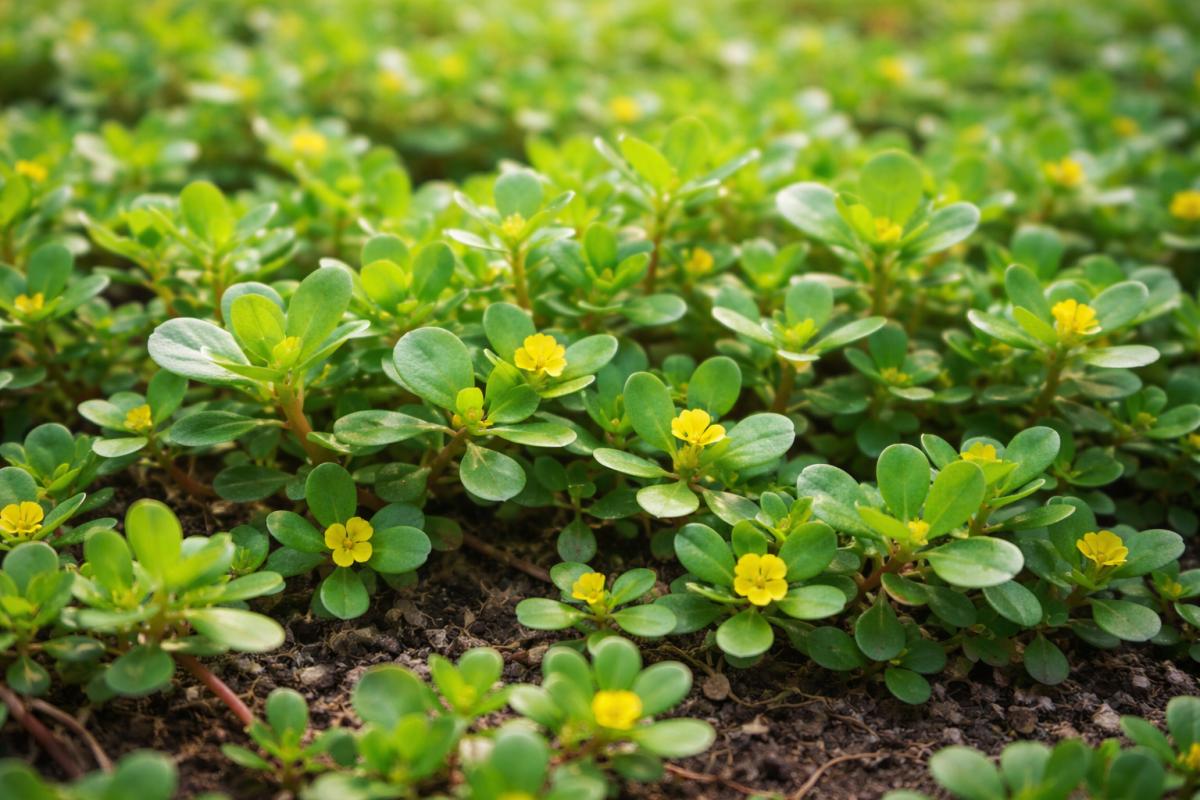
Most South African gardeners pull it out without a second thought. It appears between vegetable rows, creeps along pathways, and carpets bare soil after summer rain with its fat, succulent leaves and reddish stems. Purslane (Portulaca oleracea) has been dismissed as a garden nuisance for generations, yet it is one of the most nutritious edible plants on the planet and one that thrives in our climate with absolutely zero effort on your part.
If you are serious about growing and foraging your own food, purslane deserves a place not just in your weed bin, but on your plate.
Purslane is a low-growing annual succulent plant native to the Middle East and India, but now naturalised across every continent except Antarctica. It is a member of the Portulacaceae family, related to the ornamental moss roses (Portulaca grandiflora) you might find in local nurseries.
The plant is recognisable by its smooth, paddle-shaped leaves, which are thick and slightly waxy with a mild, slightly tangy flavour. The stems are reddish-pink and sprawl outward from a central root. It rarely grows taller than 30 cm and tends to hug the ground in a rosette pattern before sprawling as it matures. Small yellow flowers appear in summer and produce tiny black seeds in abundance, which is exactly why it self-sows so aggressively.
In South Africa, purslane is considered a common garden weed across all provinces. It thrives in Gauteng gardens through the summer growing season, loves the warm conditions of KwaZulu-Natal, and handles the dry summers of the Western Cape reasonably well given supplemental water. For self-sufficient growers, this adaptability is a significant asset.
Here is where purslane genuinely surprises people. It is not just edible; it is exceptionally nutritious, and it outperforms many vegetables you are probably already growing intentionally.
Purslane is one of the very few plant sources of omega-3 fatty acids, specifically alpha-linolenic acid (ALA). Most people associate omega-3s exclusively with fish and flaxseed, but purslane contains more ALA per gram than spinach. For households moving toward plant-based eating or trying to reduce reliance on expensive supplements, this is genuinely useful.
Beyond omega-3s, purslane is rich in vitamins A, C, and E, as well as magnesium, calcium, potassium, and iron. It contains antioxidants including beta-carotene and glutathione. The USDA nutritional database lists 100 grams of raw purslane as providing around 20 calories, making it an extremely nutrient-dense, low-calorie food.
The slightly sour, lemony flavour comes from malic acid and oxalic acid content, both naturally occurring organic acids. Eaten in reasonable quantities as part of a varied diet, purslane is completely safe. Those with kidney conditions or a tendency toward oxalate-related kidney stones should moderate their intake, as they would with spinach and sorrel.
If purslane already grows as a weed in your garden, you are halfway there. But growing it intentionally as a crop gives you cleaner, more abundant harvests from known, uncontaminated soil.
Seeds are widely available from South African seed suppliers and online stores. Sow directly into garden beds after the last frost, which in Gauteng typically means from September onward. Purslane germinates best in warm soil above 20 degrees Celsius, so Highveld summers are ideal growing conditions.
Choose a sunny spot with well-drained soil. Purslane is remarkably drought-tolerant once established, though regular watering produces larger, more succulent leaves that are more pleasant to eat. It grows well in containers and raised beds and is an excellent candidate for filling gaps between slower-growing vegetables like tomatoes and peppers.
According to the Royal Horticultural Society, purslane is best harvested young, cutting stems about 3 to 4 cm above the base to encourage continued growth. A single plant can provide multiple harvests over a season if managed this way. Allow a few plants to flower and set seed at the end of the season and you will rarely need to buy seeds again.
Wild purslane is abundant throughout South Africa and foraging it from your own garden or a known, unsprayed area is perfectly sensible. The key caution with any foraging is accurate identification.
The plant most commonly confused with purslane is spurge (Euphorbia species), a toxic plant that also grows as a low-spreading weed. The critical difference is the milky white latex sap that spurge releases when a stem is broken. Purslane stems contain no such sap and will release a clear, slightly mucilaginous juice. Purslane leaves are also noticeably thicker and more succulent than spurge leaves, and the reddish-pink coloration of the stems is distinctive once you have learned to look for it.
Only forage purslane from areas where you are confident no pesticides, herbicides, or heavy vehicle traffic has contaminated the soil. Roadside verges, municipal parks, and areas near industrial sites are not appropriate foraging locations.
Purslane is a genuinely versatile ingredient and one that fits naturally into the South African kitchen. The young stems and leaves can be eaten raw in salads, where they add a pleasant crunch and a mild tartness similar to watercress. They work well paired with tomatoes, cucumber, feta, and a simple olive oil dressing.
Lightly sauteed in butter or olive oil with garlic, purslane wilts down significantly like spinach and makes an excellent side vegetable or addition to eggs. It also works well stirred through lentil dishes, mixed into stews toward the end of cooking, or blended into smoothies for a nutritional boost without a strong flavour impact.
In Mediterranean cooking, purslane has been used for centuries. Greek fattoush-style salads, Turkish cacik variations, and Middle Eastern grain salads all feature it. For South African home cooks, it integrates easily into braai salads, egg dishes, and mixed vegetable sides.
Purslane can also be pickled in a simple brine of vinegar, salt, sugar, and water, which preserves it for several weeks and produces a tangy condiment that pairs well with grilled meats and grain bowls. For those building food preservation skills, it is a straightforward and rewarding project.
The self-sufficient garden is built around plants that give back more than they ask for. Purslane fits that philosophy perfectly. It requires no fertiliser, minimal water, no pest management, and actively fills bare soil that would otherwise host less useful weeds. It fixes nothing into the soil the way legumes do, but it does protect soil structure with its ground-covering growth habit, reducing moisture loss and erosion in exposed garden beds.
For households growing food on limited space and budget, purslane offers meaningful nutritional return from essentially zero investment. If you are already growing tomatoes, beans, or leafy greens, purslane can fill the gaps between them without competition concerns, and harvesting it regularly simply keeps your beds tidy.
It also works well as a component in a broader food forest or permaculture planting, where ground-level edible covers serve multiple functions simultaneously. In those systems, purslane’s ability to self-seed and reappear each season without replanting is an asset rather than an annoyance.
If you have never intentionally eaten purslane before, the simplest starting point is your own garden. Next time you spot those familiar fat leaves and red stems spreading between your vegetable rows, pull a small handful, rinse them thoroughly, and add them raw to a salad or scramble them through eggs. The flavour is mild enough that most people enjoy it immediately without any adjustment period.
Research published through the National Institutes of Health confirms purslane’s status as a functional food with genuinely significant health benefits, and community food security research increasingly highlights wild and semi-wild edibles like purslane as underutilised resources in food-insecure contexts.
Growing and eating purslane is one of the most low-effort, high-return decisions you can make in a South African food garden. It is free, it is nutritious, and it is almost certainly already growing in your yard. All it needs from you is the decision to stop pulling it out.